Thinning hair, slow growth, excessive shedding, breakage that seems to undo months of progress — if you're dealing with any of these, you've probably searched "sea moss hair growth" looking for answers. And you've probably found a lot of bold claims mixed with very little substance. So let's cut through the noise with a thorough, honest look at what sea moss can actually do for your hair — and what it can't.
Here's the headline: sea moss contains a genuinely impressive array of nutrients that support hair growth and scalp health, both when consumed internally and applied topically. The science behind each nutrient's role in the hair growth cycle is solid. But sea moss is not a miracle cure for hair loss, and understanding the difference between nutritional hair support and treating medical hair loss conditions is critical to setting the right expectations.
Understanding Hair Growth: The Basics You Need to Know
Before diving into how sea moss helps, you need to understand how hair actually grows. This context makes the entire conversation more useful.
Each hair on your head goes through a continuous cycle with four phases:
- Anagen (growth phase): Active growth lasting 2-7 years. The longer this phase, the longer your hair can grow. About 85-90% of your hair is in this phase at any time.
- Catagen (transition phase): A brief 2-3 week transition where the hair follicle shrinks and detaches from its blood supply.
- Telogen (resting phase): The hair rests for about 3 months. The follicle is dormant but the hair remains attached.
- Exogen (shedding phase): The old hair falls out and a new anagen hair begins growing from the follicle.
Normal hair loss is 50-100 hairs per day — these are hairs completing their natural cycle. Abnormal hair loss or slow growth usually stems from one of these causes:
- Nutritional deficiency — This is where sea moss can genuinely help
- Hormonal changes — Pregnancy, menopause, thyroid disorders, PCOS
- Stress — Acute or chronic stress can push hair prematurely into the telogen/shedding phase
- Genetic pattern loss — Androgenetic alopecia (male/female pattern baldness)
- Medical conditions — Alopecia areata, scalp infections, autoimmune disorders
- Damage — Heat styling, chemical treatments, tight hairstyles (traction alopecia)
Sea moss primarily addresses the first three causes. It cannot reverse genetic hair loss or treat medical conditions — those require medical intervention. But nutritional deficiency is far more common as a contributor to hair problems than most people realize.
Sea Moss Nutrients That Support Hair Growth
Sea moss contains a wide range of naturally occurring minerals, and several of these are directly involved in the hair growth process. Let's look at the key players.
Iron: Preventing the #1 Nutritional Cause of Hair Loss
Iron deficiency is the most common nutritional deficiency in the world and one of the leading causes of hair loss, particularly in women. According to the Journal of the American Academy of Dermatology, iron deficiency — even without full-blown anemia — can trigger telogen effluvium, a condition where hair prematurely enters the shedding phase.
Your hair follicles are among the most rapidly dividing cells in your body, making them particularly sensitive to iron status. Iron is essential for:
- Oxygen delivery to hair follicle cells via hemoglobin
- DNA synthesis in rapidly dividing follicle matrix cells
- Energy production in the follicle (hair growth is metabolically expensive)
Sea moss provides plant-based iron that's gentler on the stomach than iron supplements. When paired with vitamin C (naturally present in our real whole fruit-infused sea moss gels), iron absorption increases significantly.
Zinc: The Growth Regulator
Zinc plays a critical role in hair tissue growth and repair. It helps maintain the oil glands around hair follicles, supports protein synthesis, and regulates cell division — all essential for healthy hair production.
Zinc deficiency is directly linked to hair loss. Research has found that people with alopecia areata and telogen effluvium often have significantly lower zinc levels than people with healthy hair. Supplementing zinc in deficient individuals has been shown to reduce hair shedding and support regrowth.
Sea moss provides zinc in a bioavailable, food-matrix form that your body absorbs efficiently without the nausea that zinc supplements often cause.
Vitamins A and E: Scalp and Follicle Health
Vitamin A is essential for cell growth — including hair cells, the fastest-growing cells in the human body. It also helps your scalp produce sebum, the natural oil that moisturizes your scalp and keeps hair healthy. Too little vitamin A leads to dry, brittle hair and a flaky scalp. However, too much vitamin A can actually cause hair loss, which is why food-based sources (where your body regulates absorption) are preferable to high-dose supplements.
Vitamin E is a powerful antioxidant that protects hair follicles from oxidative stress — damage from free radicals that can prematurely age and weaken follicles. Vitamin E also supports scalp circulation, ensuring that nutrients reach hair follicles efficiently. Studies have shown that vitamin E supplementation increased hair growth in people with hair loss by up to 34.5% over an 8-month period.
Sulfur: The Structural Building Block
This is one of sea moss's most underappreciated benefits for hair. Sea moss contains sulfur-rich amino acids that are fundamental to keratin production. Keratin is the structural protein that makes up 95% of your hair's composition.
Sulfur creates the disulfide bonds that give hair its strength, elasticity, and resilience. Weak, brittle hair that breaks easily often reflects insufficient sulfur in the diet. The sulfur content of sea moss supports stronger hair strands that resist breakage and retain length.
MSM (methylsulfonylmethane) supplements are popular in the hair growth community specifically for their sulfur content. Sea moss provides sulfur naturally, alongside the other minerals needed for your body to actually use it effectively.
Iodine and Thyroid Connection
Hair loss is one of the hallmark symptoms of thyroid dysfunction. Both hypothyroidism and hyperthyroidism can cause diffuse hair thinning — loss that occurs evenly across the scalp rather than in patches.
Sea moss's rich iodine content supports healthy thyroid function, which in turn supports the hormonal environment needed for normal hair growth. If your hair thinning coincides with other thyroid symptoms (fatigue, weight changes, cold sensitivity), addressing thyroid health through proper iodine nutrition may be a key piece of the puzzle. For more on this connection, read our article on sea moss and thyroid health.
Omega-3 Fatty Acids: Scalp Nourishment
Sea moss contains omega-3 fatty acids that nourish hair follicles from within and reduce scalp inflammation. Chronic scalp inflammation is increasingly recognized as a contributor to hair thinning, as inflammatory signals can damage follicles and shorten the growth phase.
Internal Consumption vs. Topical Application: Which Works Better?
This is one of the most common questions about sea moss for hair, and the answer is: both, but for different reasons. They're complementary approaches, not competitors.
Internal Consumption: Building from Within
Eating sea moss gel daily addresses hair health at its root cause — nutritional status. Your hair follicles receive nutrients via your bloodstream, so consuming sea moss ensures that iron, zinc, sulfur, vitamins, and other growth-supporting nutrients reach every follicle from the inside.
Internal consumption is the more impactful approach for most people because:
- It addresses systemic nutritional deficiencies that affect all follicles simultaneously
- It supports thyroid function and hormonal balance that influence hair growth
- Benefits extend beyond hair — skin, nails, energy, and immunity all improve
- Effects are sustained as long as you maintain consistent daily intake
We recommend 1-2 tablespoons of sea moss gel daily for hair growth support. Consistency is everything — daily consumption over months yields far better results than sporadic large doses.
Topical Application: Direct Follicle and Scalp Support
Applying sea moss directly to your scalp and hair delivers nutrients topically, moisturizes the scalp, and provides the gel-like consistency that acts as a natural conditioner. Topical application is particularly useful for:
- Dry, flaky scalp conditions
- Hair that's been damaged by heat or chemical treatments
- Adding moisture and shine to natural hair textures
- Defining curls and reducing frizz (sea moss gel is a popular natural styling product)
For targeted topical treatment, consider our Sea Moss Hair Serum, which is formulated specifically for scalp and hair application with a concentration and texture optimized for topical use.
DIY Sea Moss Hair Mask: Step-by-Step Recipe
If you want to try topical application at home, this DIY hair mask uses sea moss gel as its base and adds complementary ingredients for maximum benefit.
Nourishing Sea Moss Hair Mask
Ingredients:
- 3 tablespoons sea moss gel (plain/unflavored works best for topical use)
- 1 tablespoon coconut oil (melted)
- 1 tablespoon raw honey
- 5 drops rosemary essential oil (studied for hair growth — shown in research to perform comparably to minoxidil)
- 5 drops peppermint essential oil (stimulates scalp circulation)
- Optional: 1 tablespoon castor oil (for extra thickness and follicle nourishment)
Instructions:
- Combine sea moss gel, melted coconut oil, and honey in a small bowl. Mix until smooth and uniform.
- Add essential oils and stir to combine.
- Section your hair while dry or slightly damp. Apply the mask starting at the scalp, using your fingertips to massage it gently into the scalp in circular motions for 2-3 minutes. Scalp massage increases blood flow to follicles.
- Work remaining mask through the lengths and ends of your hair, focusing on any dry or damaged areas.
- Cover with a shower cap or plastic wrap. For deeper penetration, wrap a warm towel over the cap — the heat opens the hair cuticle and allows nutrients to absorb more effectively.
- Leave on for 30-45 minutes (or up to 2 hours for very dry or damaged hair).
- Rinse thoroughly with lukewarm water, then shampoo and condition as normal. You may find you need less conditioner than usual — the sea moss provides significant moisture on its own.
Frequency: Once per week for maintenance, twice per week for damaged or very dry hair. Be consistent for at least 6-8 weeks before evaluating results.
Quick Daily Scalp Spray
For daily scalp nourishment without the full mask process:
- Mix 2 tablespoons sea moss gel with 1 cup of warm water until fully dissolved.
- Add 3 drops rosemary essential oil and 3 drops lavender essential oil.
- Pour into a spray bottle and shake well.
- Spray onto scalp daily and massage gently for 30-60 seconds.
- Store in the refrigerator and use within 7 days.
Realistic Timeline: When Will You See Results?
Hair grows approximately 0.5 inches per month on average. That biological reality sets the pace for any hair growth intervention, including sea moss. Here's an honest timeline of what to expect:
Month 1-2: Foundation Building
During the first two months, you're rebuilding mineral stores and addressing nutritional gaps. Externally visible changes to hair are unlikely at this stage. What you may notice:
- Reduced hair shedding (fewer hairs in your brush, shower drain, and pillowcase)
- Improved scalp condition — less dryness, flaking, or itchiness
- Hair feels stronger when you run your fingers through it
- Nails may become stronger and grow faster (same nutrients at work)
Month 3-4: Visible Changes Begin
This is when most people start noticing real differences:
- New growth at the hairline and part line ("baby hairs" emerging from previously dormant follicles)
- Increased hair thickness and density
- More shine and luster (improved keratin structure reflects light better)
- Less breakage during styling and detangling
- Hair retains length better (less snapping at weak points)
Month 5-8: Cumulative Impact
With consistent daily use over 5-8 months, the cumulative effect becomes undeniable:
- Visibly fuller, thicker hair
- Faster overall growth rate (your follicles are spending more time in the active growth phase)
- Improved texture and manageability
- Stronger hair that resists heat and mechanical damage better
- Healthier scalp environment supporting continued growth
Patience is not optional here. Hair growth is slow by nature, and anyone promising dramatic results in 2-4 weeks is not being honest. The good news is that sea moss benefits compound over time — month six is better than month three, which is better than month one. Consistency wins.
Combining Sea Moss with Other Hair-Healthy Practices
Sea moss works best as part of a comprehensive hair health strategy. Here are the most impactful practices to pair with your daily sea moss routine:
Nutrition
- Protein: Hair is protein (keratin). Ensure adequate protein intake — 0.8-1g per pound of body weight daily for active individuals.
- Biotin-rich foods: Eggs, nuts, sweet potatoes, and avocados provide biotin, a B vitamin closely linked to hair health.
- Omega-3 fatty acids: Salmon, walnuts, flaxseed, and chia seeds complement the omega-3s in sea moss for scalp health.
- Hydration: Dehydrated hair is brittle hair. Drink adequate water daily — your hair reflects your hydration status.
Hair Care Practices
- Reduce heat styling: Heat damages keratin bonds and causes irreversible structural weakness. Air dry when possible, and always use heat protectant.
- Gentle detangling: Start from the ends and work up. Use a wide-tooth comb or detangling brush on wet, conditioned hair.
- Protective styling: Loose braids, twists, and buns protect ends from friction and environmental damage.
- Satin pillowcase: Cotton pillowcases create friction that causes breakage and frizz. Satin or silk reduces friction dramatically.
- Regular trims: Counterintuitive, but trimming 1/4 inch every 8-12 weeks prevents split ends from traveling up the shaft, which causes more length loss than the trim itself.
Scalp Care
- Regular scalp massage: 5 minutes daily increases blood flow to follicles. Research has shown that daily scalp massage increased hair thickness after 24 weeks.
- Don't over-wash: Washing hair too frequently strips natural oils. For most hair types, 2-3 times per week is sufficient.
- Exfoliate occasionally: A gentle scalp scrub once a month removes buildup that can clog follicles and impede growth.
Stress Management
Stress is a silent hair killer. Acute stress can trigger telogen effluvium (mass shedding 2-3 months after a stressful event), and chronic stress creates a hostile hormonal environment for hair growth. The magnesium in sea moss supports stress resilience, but active stress management — sleep, exercise, meditation, social connection — is equally important.
Who Sees the Best Results from Sea Moss for Hair?
Based on customer feedback and the underlying science, the people who tend to see the most dramatic sea moss hair growth results are:
- People with nutrient deficiencies: If your hair problems stem from iron, zinc, or iodine deficiency, addressing those gaps with sea moss can produce significant improvement.
- People with thyroid-related hair thinning: Sea moss's iodine supports thyroid function, which can help restore normal hair growth patterns.
- Natural hair textures: Curly and coily hair types often benefit enormously from sea moss both internally (strengthening the hair shaft) and topically (moisture, definition, reduced breakage).
- Postpartum hair loss: The mineral replenishment from sea moss can help accelerate recovery from postpartum shedding (consult your doctor first if breastfeeding).
- Stress-related shedding: Sea moss addresses both the mineral depletion and the stress response that contribute to stress-induced hair loss.
The Honest Bottom Line on Sea Moss and Hair Growth
Does sea moss help with hair growth? Yes — through legitimate nutritional mechanisms that support follicle health, reduce shedding, improve hair strength, and create an environment conducive to growth. The iron, zinc, sulfur, vitamins A and E, iodine, and omega-3s in sea moss collectively address the most common nutritional contributors to poor hair health.
Is it a miracle? No. It won't reverse genetic hair loss, regrow hair in bald areas, or work overnight. It works gradually, cumulatively, and as part of a holistic approach to hair health that includes good nutrition, gentle hair care, stress management, and patience.
The people who get the best results are those who commit to daily sea moss consumption for at least 3-6 months and combine it with smart hair care practices. If that sounds like a reasonable investment in your hair, sea moss may be exactly what your hair has been missing.
For more on how sea moss benefits extend beyond hair, check out our guide on 15 Science-Backed Sea Moss Benefits.
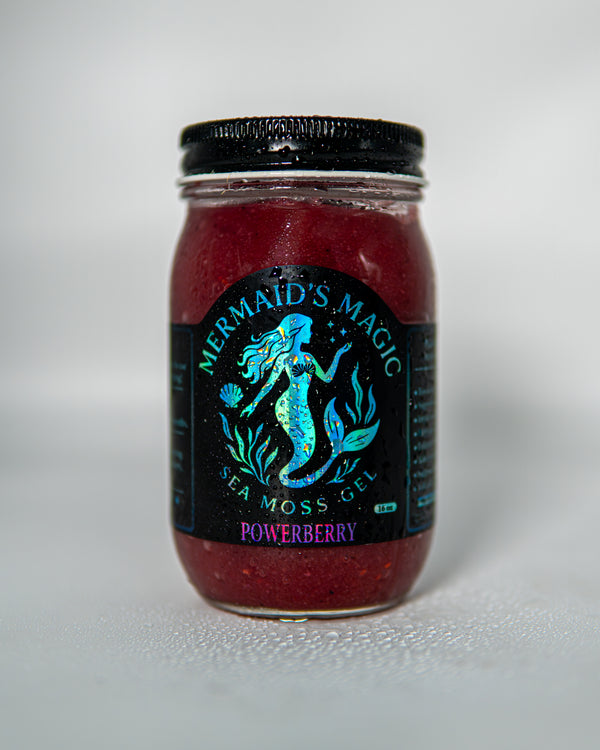
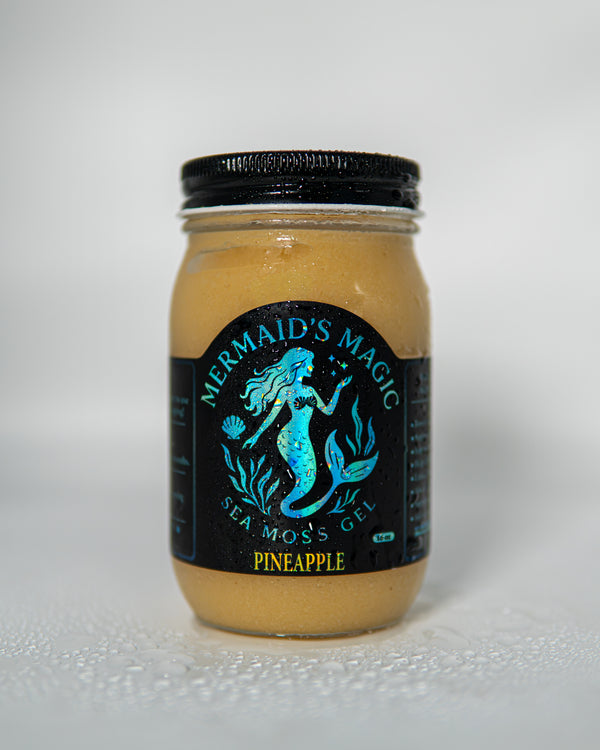
Ready to give your hair the mineral nutrition it deserves? Shop our fruit-infused sea moss gel — wild-harvested, made with real whole fruit, and packed with the nutrients your hair craves from the inside out.
Keep Reading
- DIY Sea Moss Face Mask: 5 Recipes for Glowing Skin
- Sea Moss for Skin: How This Ocean Superfood Supports a Healthy Glow
- Sea Moss Nutrition Facts: The Complete Mineral Breakdown
- Sea Moss for Thyroid Health: What You Should Know | Mermaid's Magic Sea Moss
Ready to try sea moss? Shop our fruit-infused sea moss gel collection — made with real whole fruit, wild-harvested Caribbean sea moss, and nothing artificial.