If you have ever wondered what makes sea moss one of the most nutrient-dense foods on the planet, you are about to find out. Sea moss nutrition is nothing short of remarkable — this single marine plant contains a wide range of naturally occurring minerals your body uses to function at its best. That is not marketing hype. It is a scientifically documented fact that has made sea moss a cornerstone of traditional Caribbean and Irish wellness practices for centuries.
Whether you are evaluating sea moss for the first time or trying to understand exactly what you are putting into your body, this complete mineral and vitamin breakdown will give you the full picture. We will cover macronutrients, micronutrients, how sea moss compares to common multivitamins, and why the source and preparation of your sea moss matters more than most people realize.
What Is Sea Moss and Why Is Its Nutrition Profile So Unique?
Sea moss, scientifically known as Chondrus crispus (Irish moss) or Gracilaria (Caribbean golden sea moss), is a species of red algae that grows naturally along rocky Atlantic coastlines. Unlike land-based plants that draw nutrients from soil, sea moss absorbs minerals directly from ocean water — one of the most mineral-rich environments on Earth.
This is what makes sea moss nutrition so exceptional. The ocean contains virtually every mineral found in the human body, and sea moss acts as a natural bioaccumulator, concentrating those minerals into its cell structure. The result is a whole-food source of nutrition that no single land-grown vegetable can match.
A study published in the Journal of Applied Phycology confirmed that marine algae like sea moss contain a broader spectrum of bioavailable minerals than most terrestrial plants (PubMed, 2020). This is partly because ocean minerals exist in ionic form, which the human body can absorb more efficiently.
Sea Moss Nutrition Facts Per Serving
Here is the macronutrient breakdown for a standard two-tablespoon (approximately 20g) serving of prepared sea moss gel:
- Calories: 10 kcal
- Total Fat: 0g
- Sodium: 12mg
- Total Carbohydrates: 2.5g
- Dietary Fiber: 0.5g
- Sugars: 0g
- Protein: 0.3g
At just 10 calories per serving with virtually no fat, sea moss is one of the most efficient nutrient-delivery systems available. You are getting a massive payload of minerals and vitamins for almost zero caloric cost — something synthetic multivitamins simply cannot replicate because they lack the whole-food matrix that aids absorption.
Why the Calorie Count Is Misleading
Looking at those macros alone, sea moss might seem unimpressive. But the real value of sea moss nutrition is not in calories or protein — it is in the micronutrient density. Think of sea moss less like a food and more like a concentrated mineral supplement that happens to be a whole food. That distinction matters enormously for bioavailability, which we will cover below.
The Sea Moss Mineral Breakdown
Sea moss contains a wide range of naturally occurring minerals. These minerals fall into two categories: macrominerals (needed in larger amounts) and trace minerals (needed in smaller amounts but equally essential).
Macrominerals in Sea Moss
These are the minerals your body needs in quantities greater than 100mg per day:
- Calcium: Essential for bone density, muscle contractions, and nerve signaling. Sea moss provides approximately 7% of the daily value per serving.
- Magnesium: Involved in over 300 enzymatic reactions including energy production, muscle relaxation, and sleep regulation. A frequent deficiency in Western diets.
- Potassium: Critical for heart rhythm, blood pressure regulation, and fluid balance. Sea moss is a surprisingly strong source.
- Phosphorus: Works with calcium for bone and teeth health. Also essential for ATP (energy) production at the cellular level.
- Sulfur: Supports collagen production, joint health, and detoxification pathways. Sea moss is rich in sulfated polysaccharides.
- Sodium: Present in small, naturally balanced amounts — not the excessive sodium found in processed foods.
- Chloride: Partners with sodium to maintain fluid balance and support digestive acid production.
Essential Trace Minerals in Sea Moss
Trace minerals are needed in tiny amounts, but deficiencies can cause serious health problems:
- Iron: Oxygen transport via hemoglobin. Sea moss provides a plant-based iron source that is especially valuable for vegans.
- Zinc: Immune function, wound healing, taste perception, and hormone production.
- Iodine: Thyroid hormone production and metabolic regulation. Sea moss is one of the richest natural sources of iodine available.
- Selenium: Antioxidant protection, thyroid function, and immune response. Works synergistically with the iodine in sea moss.
- Manganese: Bone formation, blood clotting, and carbohydrate metabolism.
- Copper: Iron absorption, collagen formation, and nervous system health.
- Chromium: Blood sugar regulation and insulin sensitivity.
- Molybdenum: Enzyme activation for processing sulfur-containing amino acids.
- Cobalt: A component of vitamin B12 synthesis.
- Boron: Bone metabolism and hormone regulation.
- Silicon: Connective tissue strength, hair and nail health.
- Vanadium: May support healthy blood sugar levels.
- Strontium: Bone density support.
- Germanium: Oxygen utilization at the cellular level.
- Tin: Trace amounts that support adrenal function.
The list continues with dozens more trace elements including barium, bismuth, cerium, gallium, gold, lanthanum, lithium, nickel, niobium, rubidium, silver, titanium, tungsten, and zirconium. While many of these are needed in extremely small quantities, their presence in a natural whole-food matrix — rather than isolated synthetic form — is what makes sea moss nutrition uniquely valuable.
Sea Moss Vitamins: Beyond the Minerals
Sea moss is not just a mineral powerhouse. It also contains a meaningful spectrum of vitamins:
- Vitamin A (Beta-Carotene): Supports vision, immune function, and skin health. Caribbean golden sea moss is particularly rich in beta-carotene, which gives it that distinctive golden color.
- Vitamin C: Antioxidant protection, collagen synthesis, and immune support.
- Vitamin E: Fat-soluble antioxidant that protects cell membranes.
- Vitamin K: Blood clotting and bone metabolism.
- B Vitamins: Sea moss contains B1 (thiamine), B2 (riboflavin), B3 (niacin), B9 (folate), and B12 in trace amounts. The B12 content is particularly notable for those on plant-based diets, though amounts vary by source.
Unique Bioactive Compounds
Beyond standard vitamins and minerals, sea moss contains several bioactive compounds that contribute to its health benefits:
- Carrageenan: A natural polysaccharide with prebiotic properties that supports gut health.
- Fucoxanthin: A carotenoid with antioxidant and potential metabolic benefits.
- Sulfated Polysaccharides: Anti-inflammatory and immune-modulating compounds unique to marine algae.
- Taurine: An amino acid that supports cardiovascular and nervous system function.
- Citrulline-Arginine: Amino acid precursors that may support blood flow and exercise recovery.
Sea Moss Nutrition vs. Multivitamins: An Honest Comparison
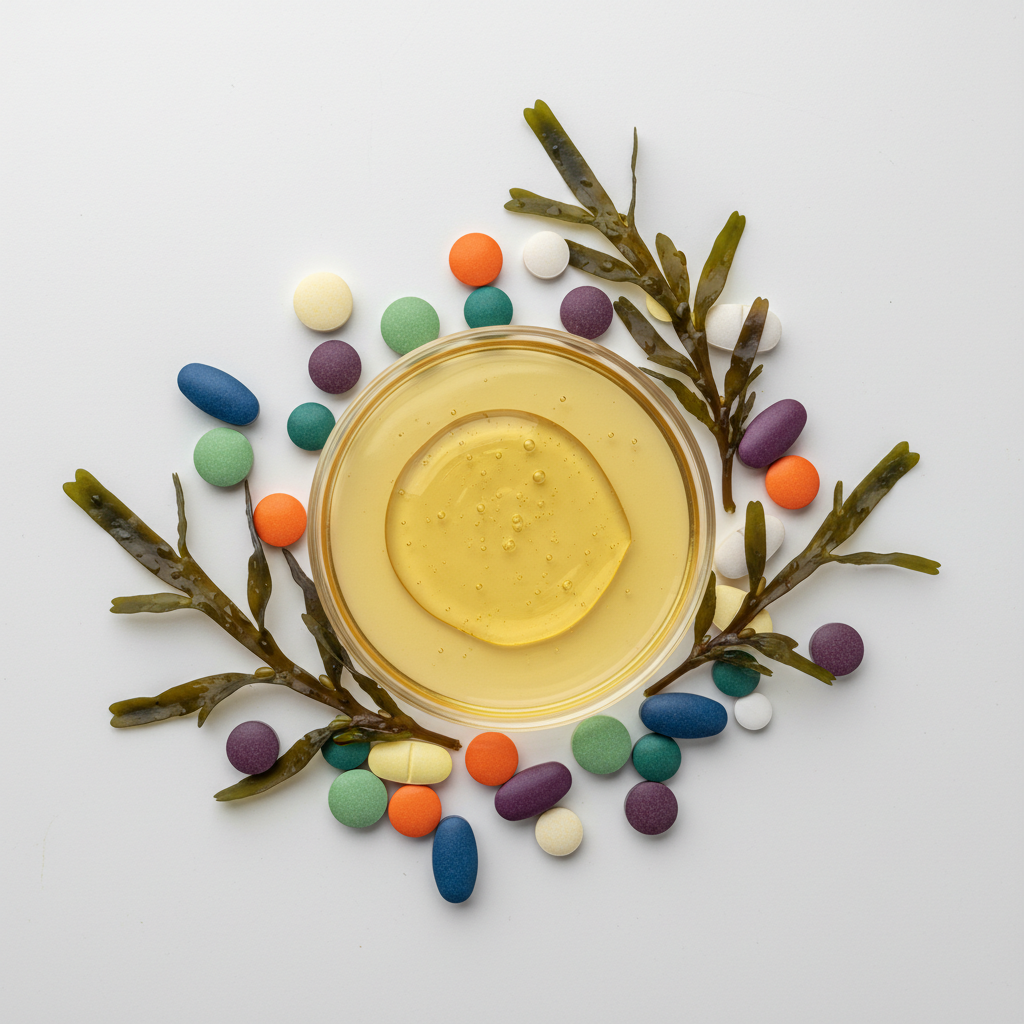
One of the most common questions we hear is: "Can sea moss replace my multivitamin?" Here is how they compare:
Where Sea Moss Wins
- Mineral breadth: a wide range of naturally occurring minerals versus the 15-25 typically found in a multivitamin.
- Bioavailability: Minerals in sea moss exist in their natural ionic and colloidal forms, bound within a whole-food matrix. Your body recognizes and absorbs these more efficiently than synthetic mineral salts like calcium carbonate or magnesium oxide.
- Synergistic ratios: The minerals in sea moss exist in naturally balanced ratios. Synthetic supplements often provide minerals in isolation, which can create absorption competition (for example, too much zinc blocks copper absorption).
- No fillers or binders: Sea moss gel is just sea moss and water. Multivitamin tablets contain binding agents, flow agents, coatings, and sometimes artificial colors.
- Additional bioactive compounds: The polysaccharides, antioxidants, and prebiotic fiber in sea moss have benefits that no multivitamin can replicate.
Where Multivitamins Win
- Vitamin D: Sea moss contains minimal vitamin D. If you are deficient, you still need sunshine or supplementation.
- Vitamin B12: While sea moss contains traces, the amounts are inconsistent and likely insufficient for someone relying on it as their sole B12 source.
- Precise dosing: Multivitamins deliver exact, measured amounts. Sea moss mineral content varies by harvest location, season, and preparation method.
- Convenience and shelf life: A pill is easier to travel with and lasts longer than fresh gel.
The conclusion most nutritionists are reaching is that sea moss and a targeted supplement (vitamin D, B12 if vegan) together outperform a standard multivitamin. You get the broad mineral base from sea moss in a form your body can actually use, then fill specific gaps with individual supplements as needed.
How Sea Moss Nutrition Varies by Source and Preparation
Not all sea moss is nutritionally equal. The mineral content of your sea moss depends heavily on three factors:
1. Wild-Harvested vs. Pool-Grown
Wild-harvested sea moss grows in the open ocean where it absorbs minerals from natural seawater currents. Pool-grown (farmed) sea moss grows in controlled tanks where the mineral content of the water is limited. Studies consistently show that wild-harvested specimens contain higher concentrations of trace minerals.
At Mermaid's Magic, we exclusively use wild-harvested Caribbean golden sea moss for this exact reason. Our sea moss grows in the warm, mineral-rich waters of the Caribbean where it develops a naturally superior nutrient profile.
2. Geographic Origin
Caribbean golden sea moss (Gracilaria) and North Atlantic Irish moss (Chondrus crispus) have slightly different nutritional profiles. Caribbean varieties tend to be higher in beta-carotene and certain trace minerals due to warmer water temperatures and longer growing seasons. Both are nutritionally excellent, but the Caribbean variety offers a milder flavor and smoother texture that works better in gel form.
3. Preparation Method
How sea moss is processed affects its final nutritional value:
- Raw dried sea moss: Highest mineral density per gram, but requires soaking and blending at home.
- Sea moss gel: Slightly diluted by water content, but minerals remain fully intact and bioavailable. This is the most popular and practical form.
- Sea moss capsules: Dehydrated and compressed. Convenient but may lose some heat-sensitive nutrients during processing.
- Sea moss powder: Similar to capsules but allows flexible dosing.
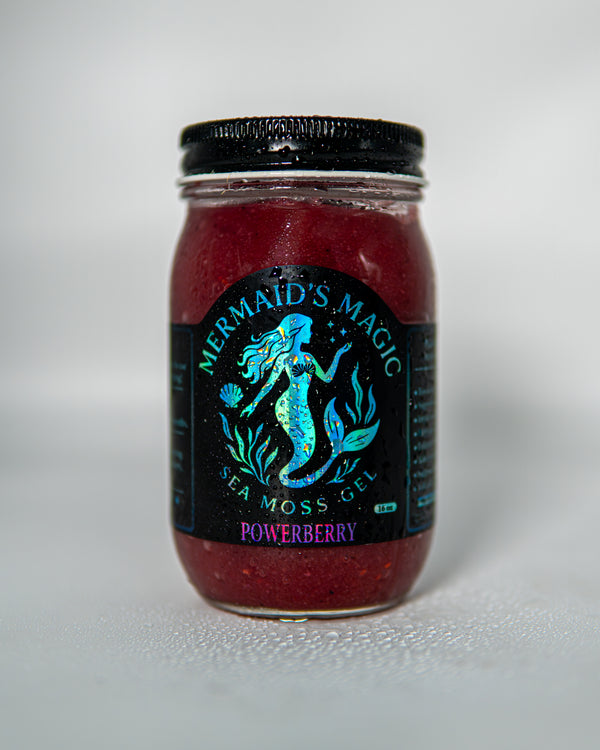
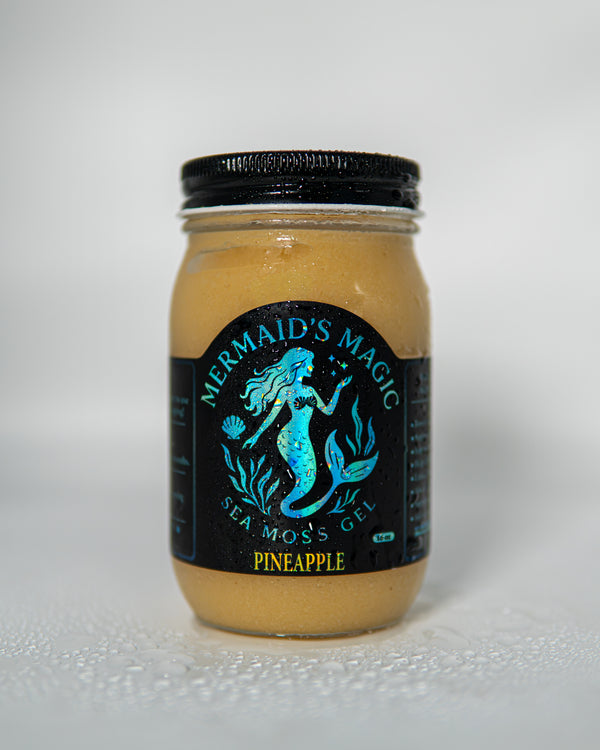
Gel form preserves the full spectrum of sea moss nutrition while making it easy to incorporate into your daily routine. When you add real whole fruit — as we do with every Mermaid's Magic sea moss gel — you also get the added vitamins, antioxidants, and fiber from the fruit itself.
Why Whole-Food Nutrition Matters More Than Isolated Nutrients
There is a growing body of research showing that nutrients consumed as part of a whole food are absorbed and utilized differently than nutrients taken in isolation. This concept, known as the "food matrix effect," is one of the strongest arguments for getting your minerals from sea moss rather than synthetic supplements.
A comprehensive review published by the National Institutes of Health found that minerals consumed within their natural food matrix showed consistently higher bioavailability compared to the same minerals in supplement form (NIH, 2019). The fiber, polysaccharides, and other natural compounds in whole foods create a delivery system that helps your body absorb and use minerals more effectively.
This is why a tablespoon of sea moss gel with its naturally occurring minerals may be doing more for your body than a multivitamin tablet with higher listed amounts of 20 isolated minerals. The numbers on the label do not tell the whole bioavailability story.
How to Get the Most Sea Moss Nutrition in Your Daily Routine
To maximize the nutritional benefits of sea moss, keep these practical tips in mind:
- Consistency matters more than quantity. One to two tablespoons daily is the recommended serving. Taking more does not proportionally increase absorption — your body can only process so many minerals at once.
- Pair with vitamin C-rich foods. Vitamin C enhances iron absorption. Adding sea moss gel to a fruit smoothie is an ideal combination — and exactly why our fruit-infused gels are so effective.
- Take with healthy fats. Vitamins A, E, and K in sea moss are fat-soluble, meaning they absorb better when consumed with a small amount of fat. A smoothie with avocado or nut butter works perfectly.
- Avoid boiling sea moss. Excessive heat can degrade some vitamins and alter mineral availability. Sea moss gel that has been gently blended (not cooked at high temperatures) retains the most nutrition.
- Choose gel over capsules when possible. The hydrated gel form preserves the natural food matrix and bioavailability better than dehydrated formats.
Frequently Asked Questions About Sea Moss Nutrition
Does sea moss have protein?
Sea moss contains a small amount of protein — about 0.3g per serving of gel. It is not a significant protein source, but it does contain essential amino acids including taurine that support overall health.
Is sea moss high in calories?
No. Sea moss gel contains approximately 10 calories per two-tablespoon serving. It is one of the most nutrient-dense, low-calorie foods available.
Can sea moss provide too much iodine?
Sea moss is one of the richest natural sources of iodine. For most people, one to two tablespoons of gel per day provides a beneficial amount. If you have a thyroid condition or are taking thyroid medication, consult your healthcare provider about appropriate intake levels.
Does cooking destroy sea moss minerals?
Minerals are heat-stable and are not destroyed by cooking. However, some vitamins (particularly vitamin C and certain B vitamins) can be reduced by high heat. This is why gel form, which involves minimal heat processing, is nutritionally superior to heavily processed sea moss products.
The Bottom Line on Sea Moss Nutrition
Sea moss is not a miracle cure, and we will never claim it is. But from a pure nutrition standpoint, it is difficult to find another single whole food that delivers naturally occurring minerals, a spectrum of vitamins, prebiotic fiber, and anti-inflammatory compounds in a 10-calorie, zero-fat serving. That is an extraordinary nutritional profile by any standard.
The key is choosing a high-quality source. Wild-harvested Caribbean sea moss, prepared as a fresh gel, delivers the most complete and bioavailable nutrition. When that gel is infused with real whole fruit — not juice concentrates or artificial flavoring — you get an even richer nutritional experience.
Ready to experience the full spectrum of sea moss nutrition for yourself? Explore our fruit-infused sea moss gels and find your perfect daily ritual. Every jar of Mermaid's Magic is made with wild-harvested Caribbean sea moss and real whole fruit — because your body deserves real nutrition, not synthetic shortcuts.
Keep Reading
- 15 Science-Backed Sea Moss Benefits You Need to Know
- What Is Sea Moss? The Complete Beginner's Guide to This Caribbean Superfood
- How Sea Moss Supports Your Immune System Year-Round
- Sea Moss for Gut Health: Your Digestive System's New Best Friend
Ready to try sea moss? Shop our fruit-infused sea moss gel collection — made with real whole fruit, wild-harvested Caribbean sea moss, and nothing artificial.