Sea Moss for Thyroid Health: What You Should Know | Mermaid's Magic Sea Moss
Sea Moss for Thyroid Health: What You Should Know
If you've been researching natural ways to support your thyroid, you've likely come across sea moss thyroid benefits in your search. And for good reason. This ocean-grown superfood has been used for centuries in Caribbean and Irish coastal communities, and modern science is beginning to understand why it may play a meaningful role in thyroid function. Sea moss — particularly wild-harvested Caribbean sea moss — is one of the richest natural sources of iodine and selenium, two minerals your thyroid absolutely depends on to do its job.
But before you rush to add sea moss to your daily routine for thyroid support, there are important nuances to understand. Not everyone should increase their iodine intake, and the quality of sea moss you choose matters enormously. In this guide, we'll break down the science, the benefits, the cautions, and how to incorporate sea moss safely into your wellness routine.
Understanding Your Thyroid: The Master Regulator
Your thyroid is a small, butterfly-shaped gland located at the base of your neck. Despite its modest size, it plays an outsized role in nearly every system in your body. Think of your thyroid as a thermostat for your metabolism — it regulates how fast or slow your body burns energy, and its influence extends far beyond weight management.
The thyroid produces two primary hormones:
- T4 (thyroxine) — The "storage" hormone. Your thyroid produces this in larger quantities, and your body converts it to T3 as needed.
- T3 (triiodothyronine) — The "active" hormone. This is what actually drives metabolic processes in your cells.
When your thyroid functions properly, you experience steady energy levels, healthy weight management, clear thinking, regular digestion, and balanced mood. When it doesn't, things start to go sideways — and the effects can be subtle at first, making thyroid dysfunction easy to miss.
Common Signs of Thyroid Imbalance
Thyroid disorders affect an estimated 20 million Americans, according to the National Institute of Diabetes and Digestive and Kidney Diseases (NIDDK). Symptoms of an underactive thyroid (hypothyroidism) include:
- Persistent fatigue and sluggishness
- Unexplained weight gain or difficulty losing weight
- Feeling cold when others are comfortable
- Dry skin and brittle hair
- Brain fog and difficulty concentrating
- Constipation and digestive slowdown
- Muscle weakness and joint stiffness
- Depression or low mood
An overactive thyroid (hyperthyroidism) presents differently — with symptoms like rapid heart rate, anxiety, unexplained weight loss, tremors, and heat sensitivity. This distinction matters when we discuss sea moss and iodine, as we'll explore below.
The Role of Iodine in Thyroid Health
Iodine is the single most critical mineral for thyroid function. Your thyroid literally cannot produce its hormones without it. Both T3 and T4 are built around iodine atoms — T4 contains four iodine atoms, and T3 contains three. Without adequate iodine intake, your thyroid simply doesn't have the raw materials it needs.
The recommended daily intake of iodine for adults is 150 micrograms per day, with pregnant and breastfeeding women needing 220-290 micrograms. While iodine deficiency was largely eliminated in developed countries through iodized salt, a shift toward sea salt, kosher salt, and reduced sodium diets has led to what some researchers call a "re-emergence" of suboptimal iodine levels.
Here's where it gets interesting: sea moss is one of nature's most concentrated sources of bioavailable iodine. Studies on various species of seaweed and sea vegetables have found iodine concentrations ranging from 16 to over 2,000 micrograms per gram, depending on the species and growing conditions.
Why Natural Iodine Sources Matter
Not all iodine is created equal. The iodine in sea moss exists in its natural, food-matrix form — bound to organic compounds that your body recognizes and can process efficiently. This is different from the potassium iodide added to table salt, which is a synthetic form your body handles differently.
Natural food-source iodine tends to be:
- More gradually absorbed, reducing the risk of iodine spikes
- Accompanied by co-factors (like selenium) that support proper utilization
- Better tolerated by people with sensitive digestive systems
- More bioavailable due to the presence of complementary minerals
How Sea Moss Supports Thyroid Function Beyond Iodine
While iodine gets most of the attention in the sea moss thyroid conversation, sea moss provides several other nutrients that work synergistically to support healthy thyroid function. This is what makes it more effective than simply taking an iodine supplement.
Selenium: The Essential Partner
Selenium is the second most important mineral for thyroid health. Your thyroid contains more selenium per gram of tissue than any other organ in your body. Selenium serves two critical functions:
- Conversion catalyst: Selenium-dependent enzymes (called deiodinases) convert T4 to the active T3 hormone. Without adequate selenium, you can have plenty of T4 but still feel hypothyroid because your body can't activate it.
- Antioxidant protection: Thyroid hormone production generates hydrogen peroxide as a byproduct. Selenium-based antioxidant enzymes (glutathione peroxidase) neutralize this oxidative stress, protecting your thyroid cells from damage.
Research published in the International Journal of Endocrinology has shown that selenium supplementation can improve thyroid function markers and reduce thyroid antibody levels in people with autoimmune thyroiditis.
Zinc, Iron, and B Vitamins
Sea moss contains 92 of the 102 essential minerals your body needs, including several that play supporting roles in thyroid health:
- Zinc — Required for the synthesis of thyroid-releasing hormone (TRH) in the hypothalamus, which signals your thyroid to produce hormones
- Iron — Thyroid peroxidase, the enzyme that produces thyroid hormones, is iron-dependent. Iron deficiency can mimic or worsen hypothyroid symptoms
- B vitamins — Support cellular energy production and help your body utilize thyroid hormones at the cellular level
- Magnesium — Involved in the conversion of T4 to T3 and helps manage the stress response that can suppress thyroid function
This comprehensive mineral profile is why many people report feeling a difference when they switch from isolated iodine supplements to whole-food sources like sea moss gel. The nutrients work together in ways that isolated supplements simply can't replicate.
Sea Moss and Hypothyroidism: What the Research Shows
While large-scale clinical trials specifically on sea moss and thyroid health are still limited, the research on seaweed and thyroid function is growing. Several key findings support the traditional use of sea moss for thyroid support:
Iodine bioavailability studies have shown that iodine from seaweed sources is highly bioavailable, with absorption rates comparable to or exceeding that of potassium iodide supplements. The organic binding of iodine in seaweed may actually provide a more sustained release, preventing the sharp spikes associated with supplement forms.
Population studies in coastal communities with high seaweed consumption consistently show lower rates of thyroid dysfunction. Japanese populations, who consume significant quantities of seaweed daily, have historically had lower rates of hypothyroidism — though the relationship is complex and influenced by many factors.
Mineral synergy research suggests that the combination of iodine, selenium, zinc, and iron found naturally in sea moss may be more effective for thyroid support than any single mineral alone. This "whole food" approach aligns with the broader movement toward food-based nutrition over isolated supplementation.
How People Are Using Sea Moss for Thyroid Support
Many of our customers at Mermaid's Magic report incorporating sea moss into their thyroid wellness routine. Common approaches include:
- Taking 1-2 tablespoons of fruit-infused sea moss gel daily, typically in the morning
- Blending sea moss gel into morning smoothies for a nutrient-dense start to the day
- Using sea moss consistently for 4-6 weeks before evaluating results
- Combining sea moss with other thyroid-supportive practices like stress management and adequate sleep
Who Should Be Cautious: Sea Moss and Hyperthyroidism
This is the section we feel most strongly about including, because transparency matters more than sales. Sea moss is not appropriate for everyone, particularly when it comes to thyroid health.
If you have an overactive thyroid (hyperthyroidism) or Graves' disease, adding iodine-rich sea moss to your diet could potentially worsen your condition. Excess iodine can stimulate an already overactive thyroid to produce even more hormones, intensifying symptoms like rapid heartbeat, anxiety, and weight loss.
People Who Should Consult a Doctor Before Using Sea Moss
- Anyone currently taking thyroid medication (levothyroxine, methimazole, etc.) — sea moss could alter your medication needs
- People with Graves' disease or hyperthyroidism — additional iodine may be contraindicated
- People with Hashimoto's thyroiditis — the relationship between iodine and autoimmune thyroid disease is complex; some benefit, others don't
- Pregnant or breastfeeding women — iodine needs change during pregnancy, and dosage should be monitored
- Anyone scheduled for thyroid testing — high iodine intake can temporarily affect thyroid lab results
We say this not to scare you away from sea moss, but because we believe an informed customer is the best customer. If you have a diagnosed thyroid condition, please work with your healthcare provider to determine whether sea moss is right for you.
Dosage Considerations for Thyroid Support
When using sea moss for thyroid support, dosage matters more than for general wellness use. Here are our recommendations:
Starting Dosage
If you're new to sea moss and interested in thyroid benefits, start conservatively:
- Week 1-2: 1 teaspoon (approximately 5g) of sea moss gel daily
- Week 3-4: Increase to 1 tablespoon (approximately 15g) daily if well tolerated
- Ongoing: 1-2 tablespoons daily as a maintenance dose
This gradual approach allows your body to adjust to the increased mineral intake and lets you monitor how you feel. Pay attention to energy levels, digestion, mood, and any changes in how you feel throughout the day.
Timing Your Daily Dose
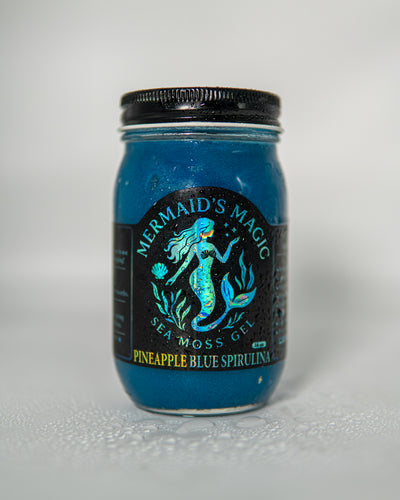
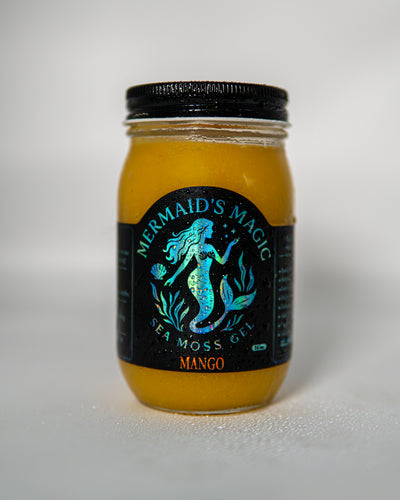
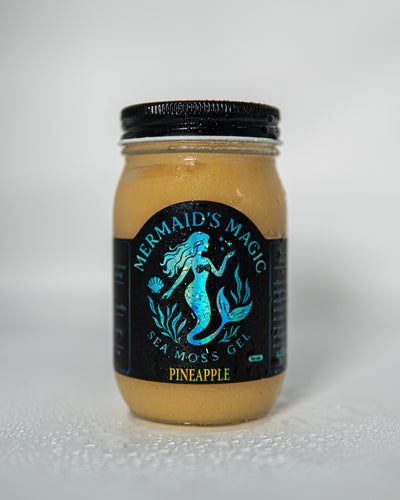
Most people find morning consumption most effective for thyroid support. Taking sea moss early in the day aligns with your thyroid's natural hormone production cycle and provides sustained mineral availability throughout the day. Many customers blend their daily serving of our Pineapple Mango sea moss gel into their morning smoothie for a delicious, convenient routine.
Signs You May Be Getting Too Much Iodine
While rare with food-source iodine, it's possible to overdo it. Watch for these signs:
- Metallic taste in your mouth
- Increased salivation
- Digestive upset (nausea, stomach pain)
- Skin breakouts
- Heart palpitations
If you experience any of these symptoms, reduce your dosage or take a break and consult your healthcare provider.
Why Quality and Sourcing Matter for Thyroid Benefits
Not all sea moss is created equal, and when you're using it for something as important as thyroid support, quality becomes paramount. Here's what to look for:
Wild-Harvested vs. Pool-Grown
Wild-harvested sea moss, like what we use at Mermaid's Magic, grows in its natural ocean environment where it absorbs minerals directly from seawater. Pool-grown (farmed) sea moss is cultivated in controlled environments that often lack the full mineral spectrum of open ocean water. The iodine and selenium content of pool-grown sea moss can be significantly lower than its wild counterpart.
Lab Testing for Heavy Metals
Because sea moss absorbs minerals from its environment, it can also absorb contaminants like lead, arsenic, cadmium, and mercury if harvested from polluted waters. For thyroid support specifically, heavy metal contamination is doubly concerning because heavy metals can directly interfere with thyroid function — the very thing you're trying to improve.
Every batch of Mermaid's Magic sea moss is lab tested for heavy metals and contaminants. We source exclusively from pristine Caribbean waters, far from industrial pollution and shipping lanes. When your thyroid health is on the line, you shouldn't settle for untested product from unknown origins.
Real Whole Fruit vs. Concentrates
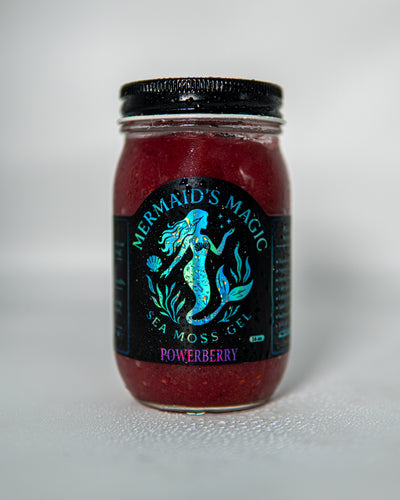
Many sea moss gel brands use juice concentrates, "natural flavoring," or artificial additives to make their products palatable. These additives can contain substances that actually work against thyroid health. At Mermaid's Magic, we use real whole fruit — freshly blended into every jar. No concentrates. No shortcuts. Just pure sea moss and real fruit, supporting your thyroid naturally.
Incorporating Sea Moss Into Your Thyroid Wellness Routine
Sea moss works best as part of a comprehensive approach to thyroid health. Here's how to maximize the benefits:
Build a Thyroid-Supportive Daily Routine
- Morning: 1-2 tablespoons of sea moss gel — straight from the spoon or blended into a smoothie
- Nutrition: Include other thyroid-supportive foods like Brazil nuts (selenium), pumpkin seeds (zinc), and leafy greens (iron)
- Movement: Regular exercise supports thyroid hormone sensitivity and metabolism
- Stress management: Chronic stress directly suppresses thyroid function through elevated cortisol. Prioritize sleep, meditation, or whatever calms your nervous system
- Limit goitrogens: Raw cruciferous vegetables (broccoli, kale, cauliflower) in very large quantities can interfere with iodine uptake. Cooking them eliminates this concern
Track Your Progress
If you're using sea moss for thyroid support, keep a simple journal noting your energy levels, mood, weight, body temperature, and any other symptoms you're monitoring. Give it at least 6-8 weeks of consistent daily use before evaluating results. Thyroid changes happen gradually, and mineral stores take time to rebuild.
If you're working with a healthcare provider, consider getting thyroid labs (TSH, Free T3, Free T4, thyroid antibodies) before starting sea moss and again after 2-3 months of consistent use. This gives you objective data to complement how you feel.
The Bottom Line on Sea Moss and Thyroid Health
Sea moss offers a compelling, food-based approach to thyroid support that aligns with how your body was designed to receive nutrition — through whole foods rich in synergistic minerals. Its natural iodine, selenium, zinc, and iron content addresses multiple aspects of thyroid function simultaneously, something no single-mineral supplement can do.
However, sea moss is not a replacement for medical treatment if you have a diagnosed thyroid condition. It's a nutritional tool that, when used appropriately, can complement your overall thyroid wellness strategy. And quality matters enormously — choose wild-harvested, lab-tested sea moss from transparent brands.
For more on how sea moss supports your overall wellbeing, check out our comprehensive guide on 15 Science-Backed Sea Moss Benefits.
Ready to support your thyroid naturally? Shop our wild-harvested, fruit-infused sea moss gel — made with real whole fruit, lab tested for purity, and packed with the minerals your thyroid craves.
Keep Reading
- Sea Moss for Athletes: Recovery, Performance & Endurance
- Sea Moss for Energy: A Natural Alternative to Caffeine | Mermaid's Magic Sea Moss
- Sea Moss Nutrition Facts: The Complete Mineral Breakdown
- How Sea Moss Supports Your Immune System Year-Round
Ready to try sea moss? Shop our fruit-infused sea moss gel collection — made with real whole fruit, wild-harvested Caribbean sea moss, and nothing artificial.