Sea Moss Knowledge Hub
DIY Sea Moss Face Mask: 5 Recipes for Glowing Skin
A sea moss face mask is one of the simplest, most affordable, and genuinely effective additions to a natural skincare routine. Sea moss has been used topically — applied directly to skin — in Caribbean and Irish folk traditions for generations, long before it became a trending wellness ingredient. The same mineral density, collagen-supporting nutrients, and hydrating polysaccharides that make sea moss beneficial when consumed internally also make it a remarkably effective topical skin treatment. In this guide, we explain why sea moss works on skin, then walk through five detailed mask recipes targeting specific skin concerns: deep hydration, brightening, acne and congestion, anti-aging, and sensitive/soothing skin.
Why Sea Moss Works Topically: The Science Behind the Glow
Before you apply anything to your face, it is worth understanding what it is doing and why. Sea moss's effectiveness as a topical ingredient stems from several properties that are relevant to skin health:
Hydration and Polysaccharide Film-Forming
The polysaccharides in sea moss — the same compounds that give sea moss gel its characteristic thick, gelatinous texture — are film-forming humectants. When applied to skin, they attract water molecules from the air and the deeper layers of the dermis, drawing that moisture to the surface and then forming a light, breathable film that slows moisture evaporation. This is the same mechanism behind many premium synthetic hydrating serums, but in sea moss it occurs naturally with a complex of multiple polysaccharides rather than a single isolated compound.
The result is immediate, noticeable hydration — the kind that makes skin feel plump, soft, and visibly dewy after a mask is removed. For anyone dealing with dehydration fine lines (as opposed to true aging wrinkles), this effect can be temporarily quite dramatic.
Minerals That Support Skin Structure
Wild-harvested sea moss contains zinc, sulfur, calcium, magnesium, potassium, and selenium among its broader mineral spectrum. Several of these have direct relevance to skin health when delivered topically:
- Zinc is one of the most studied topical minerals for skin health, with a well-established role in regulating sebum production, reducing inflammation, and inhibiting the bacteria (Cutibacterium acnes) associated with acne. Topical zinc formulations are used in both prescription and over-the-counter acne treatments.
- Sulfur has a long history in topical dermatology for its keratolytic properties — it gently loosens dead skin cells, unclogs pores, and has mild antimicrobial effects.
- Selenium is an antioxidant mineral that, when delivered to the skin, helps protect against oxidative damage from UV radiation and environmental pollutants.
Vitamin Content for Skin Repair
Sea moss contains vitamins A, C, E, and K along with various B vitamins. Vitamin C is a direct cofactor in collagen synthesis — your skin cannot produce collagen without it. Vitamin A (retinol precursors) regulates cell turnover and is the active ingredient in one of dermatology's most evidence-backed anti-aging treatments. Vitamin E is a lipid-soluble antioxidant that protects cell membranes from oxidative damage. Delivered in a whole-food matrix through a topical mask, these vitamins contribute to the skin-supportive effects of sea moss.
Research on the topical applications of seaweed-derived compounds, including their antioxidant, anti-inflammatory, and hydrating properties, has been explored in peer-reviewed literature and reviewed through resources such as the National Library of Medicine.
Anti-Inflammatory Properties
Several bioactive compounds in sea moss — including sulfated polysaccharides and phycobiliproteins — have demonstrated anti-inflammatory activity in early research. Topically, these compounds can help calm redness, reduce irritation, and soothe reactive or inflamed skin. This is why sea moss is particularly well-suited for sensitive skin and rosacea-prone complexions when used carefully.
Before You Begin: Patch Test and Preparation
Patch test first — always. Even natural ingredients can trigger reactions in sensitive or allergic individuals. Before applying any new ingredient to your face, apply a small amount to the inside of your wrist or elbow, wait 24 hours, and check for redness, itching, swelling, or any adverse reaction. If you experience any of these, do not proceed with the face application.
For all recipes below, start with plain sea moss gel as the base — not a flavored gel with added fruit, which may introduce additional ingredients that could irritate skin. If you only have flavored sea moss gel on hand, use plain sea moss gel prepared from soaked, blended sea moss, or purchase a plain gel without added ingredients. You can use Mermaid's Magic Sea Moss Gel as the foundation, but for topical use, unflavored is ideal.
All masks are most effective on clean skin. Wash your face gently before applying, and ensure your hands are clean to avoid introducing bacteria to the mask or your face.
Recipe 1: Deep Hydration Mask
Best for: Dry skin, dehydration, post-sun exposure, winter skin, or anyone who wakes up with tight, parched skin.
Ingredients
- 2 tablespoons plain sea moss gel
- 1 teaspoon raw honey (manuka preferred, but any raw honey works)
- 1 teaspoon cold-pressed rosehip oil
- 3 drops pure aloe vera gel (optional, enhances hydration)
Instructions
- Combine sea moss gel and honey in a small clean bowl. Mix thoroughly until fully integrated — the honey will soften the gel slightly.
- Add rosehip oil and aloe vera. Stir gently to combine.
- Apply a generous, even layer to clean, dry skin, avoiding the immediate eye area and lips.
- Leave on for 15–20 minutes. The mask should feel cooling and gently tightening.
- Rinse off thoroughly with lukewarm water. Follow with your usual moisturizer if desired — you may find your skin does not need it immediately after this mask.
Why It Works
Sea moss provides the foundational hydrating polysaccharide film. Raw honey is a humectant, drawing moisture into skin, and also contains antimicrobial enzymes and trace antioxidants. Rosehip oil delivers vitamin C, vitamin A, and linoleic acid — a fatty acid particularly beneficial for dry, aging skin. Together, these ingredients address multiple layers of hydration simultaneously.
Frequency: 2–3 times per week.
Recipe 2: Brightening and Glow Mask
Best for: Dull skin, uneven tone, post-inflammatory hyperpigmentation, or anyone wanting a genuine morning-after glow.
Ingredients
- 2 tablespoons plain sea moss gel
- 1 teaspoon fresh lemon juice (squeeze right before using; bottled lemon juice is too harsh)
- 1 teaspoon plain yogurt (full-fat, live-culture)
- ½ teaspoon turmeric powder
Instructions
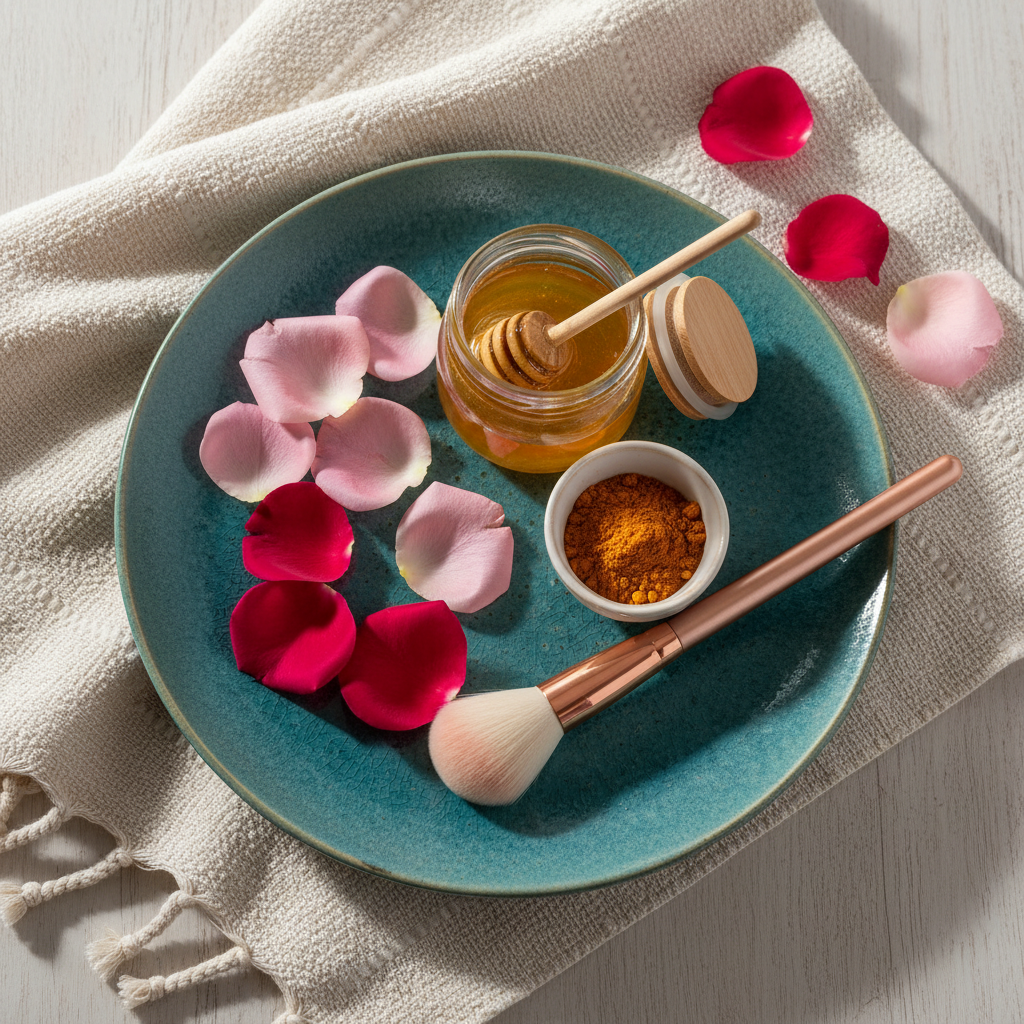
- Whisk together all ingredients in a small bowl until smooth. The turmeric will turn the mask golden-yellow — this will not stain most skin types if rinsed thoroughly, but if you are concerned, test on your jaw first.
- Apply evenly to clean skin. Avoid the eye area.
- Leave on for 10–15 minutes only. Do not exceed 15 minutes with lemon juice on skin, as the acidity can cause irritation with extended exposure.
- Rinse with cool water. Pat dry gently.
- Important: Do not apply this mask before sun exposure. The lemon juice (citric acid) can make skin temporarily more photosensitive. Evening application is recommended.
Why It Works
Sea moss provides hydration and mineral support. Lemon juice delivers vitamin C, a well-studied brightening agent that inhibits melanin synthesis and contributes to collagen production. Yogurt's lactic acid provides gentle chemical exfoliation that resurfaces dull dead-skin buildup. Turmeric contains curcumin, an anti-inflammatory and mild brightening compound used in Ayurvedic skincare traditions for centuries.
Frequency: Once per week, in the evening.
Recipe 3: Acne and Congestion-Clearing Mask
Best for: Oily and acne-prone skin, congested pores, blackheads, or anyone experiencing breakouts.
Ingredients
- 2 tablespoons plain sea moss gel
- 1 teaspoon bentonite clay or kaolin clay
- 1 teaspoon raw apple cider vinegar
- 2 drops tea tree essential oil
Instructions
- In a glass or ceramic bowl (not metal — bentonite clay reacts with metal), mix the sea moss gel and clay until smooth.
- Add apple cider vinegar slowly while stirring — the mixture will fizz slightly if using bentonite clay; this is normal.
- Add tea tree oil last and mix thoroughly.
- Apply to clean skin, focusing on areas prone to congestion (forehead, nose, chin). Avoid the delicate eye area and avoid applying to broken or actively inflamed acne lesions.
- Leave on for 10–12 minutes. The clay will tighten as it dries; remove before it cracks completely, as over-dried clay can over-strip skin's natural barrier.
- Rinse thoroughly with warm water, then splash with cool water to close pores. Follow with a light, non-comedogenic moisturizer.
Why It Works
Sea moss provides zinc — a mineral with documented topical benefits for acne — and anti-inflammatory polysaccharides that reduce redness and irritation around breakouts. Clay draws sebum and impurities from pores through adsorption. Apple cider vinegar's malic acid gently exfoliates while mildly adjusting skin's pH toward its natural slightly acidic state. Tea tree oil is one of the best-studied natural antimicrobials for skin, with research supporting its efficacy against acne-causing bacteria.
Frequency: Once per week. More frequent use can over-dry and irritate skin.
Recipe 4: Anti-Aging and Firming Mask
Best for: Mature skin, fine lines, loss of elasticity, or anyone wanting to support collagen production and skin firmness.
Ingredients
- 2 tablespoons plain sea moss gel
- 1 teaspoon vitamin C powder (L-ascorbic acid, cosmetic grade) or 1 teaspoon fresh orange juice
- 1 teaspoon argan oil
- 1 teaspoon mashed ripe avocado
Instructions
- Mash the avocado thoroughly in a bowl until completely smooth — lumps will make the mask difficult to apply evenly.
- Add sea moss gel and mix until integrated.
- Add vitamin C powder or orange juice and argan oil. Mix thoroughly.
- Apply a generous layer to clean skin, including neck and décolletage — areas often overlooked in anti-aging routines.
- Leave on for 20 minutes. Rinse with lukewarm water and pat dry gently.
Why It Works
Sea moss provides the collagen-cofactor minerals — vitamin C, vitamin K, trace minerals — alongside its hydrating polysaccharide base. Vitamin C directly stimulates fibroblasts to produce collagen and inhibits enzyme activity that degrades existing collagen. Argan oil is rich in oleic acid, linoleic acid, and tocopherols (vitamin E) that support the skin barrier and lipid layer. Avocado contributes glutathione, a master antioxidant, alongside vitamin E and the monounsaturated fats that plump and protect mature skin.
Frequency: 1–2 times per week.
Recipe 5: Soothing and Sensitive Skin Mask
Best for: Sensitive, reactive, or rosacea-prone skin; post-sun exposure; irritation; redness; or skin recovering from procedures.
Ingredients
- 2 tablespoons plain sea moss gel
- 1 tablespoon pure aloe vera gel (fresh from plant or pure store-bought without additives)
- 1 teaspoon oat flour or finely ground rolled oats (colloidal oat)
- 1 teaspoon chamomile tea, brewed and cooled (optional)
Instructions
- Combine sea moss gel and aloe vera in a bowl and mix until smooth.
- Add oat flour and chamomile tea (if using). The mixture should be thick but spreadable; adjust with a small amount of chamomile tea or water if too thick.
- Apply gently to clean skin with fingertips or a soft brush — avoid rubbing on sensitive skin.
- Leave on for 15–20 minutes. This mask should feel immediately cooling and calming.
- Rinse with cool water only — no hot water on sensitive or reactive skin. Pat dry with a clean soft cloth.
- No follow-up products are required immediately after this mask; the skin should feel calm, hydrated, and settled.
Why It Works
Sea moss's anti-inflammatory polysaccharides reduce redness and calm reactive skin. Aloe vera contains acemannan, a polysaccharide with cooling, anti-inflammatory, and wound-healing properties. Colloidal oatmeal is one of the few natural ingredients with FDA approval as a skin protectant — it binds to skin's surface, reduces water loss, and calms irritation through avenanthramide compounds. Chamomile contains bisabolol and apigenin, anti-inflammatory compounds with documented ability to reduce skin redness and sensitivity.
Frequency: As needed — this mask is gentle enough for daily use if desired.
Getting the Most From Your Sea Moss Skincare Routine
Topical sea moss masks are a powerful complement to internal sea moss consumption — the two approaches work from different directions toward the same goal of healthier, more resilient skin. Internal consumption provides the mineral and nutrient foundation that supports skin structure and repair from within; topical application delivers active compounds directly to the skin's surface.
For the best results, consider combining a daily internal routine — one to two tablespoons of Mermaid's Magic Sea Moss Gel in a morning smoothie or straight — with two to three topical mask sessions per week using the recipes above. Improvements in skin hydration, tone, and clarity from internal consumption typically become noticeable within two to four weeks of consistent use.
For more on sea moss's internal benefits for skin health and the nutrients that drive those effects, see our article on sea moss for skin: how it supports a healthy glow.
Start Glowing From Within
The best skincare routine works from the inside out. Wild-harvested Caribbean sea moss blended with real whole fruit — the minerals, vitamins, and hydrating compounds your skin needs to look and feel its best, starting with your morning spoonful.
Keep Reading
- How to Store Sea Moss Gel (And How Long It Actually Lasts)
- Sea Moss for Hair Growth: Does It Really Work? | Mermaid's Magic Sea Moss
- Sea Moss Nutrition Facts: The Complete Mineral Breakdown
- Sea Moss for Skin: How This Ocean Superfood Supports a Healthy Glow
Ready to try sea moss? Shop our fruit-infused sea moss gel collection — made with real whole fruit, wild-harvested Caribbean sea moss, and nothing artificial.