Wild-Harvested vs. Pool-Grown Sea Moss: Why Your Source Matters
Wild-Harvested vs. Pool-Grown Sea Moss: Why Your Source Matters
Not all sea moss is created equal. In fact, the difference between wild-harvested sea moss and pool-grown sea moss is so significant that they might as well be entirely different products. As sea moss has exploded in popularity — becoming a mainstream wellness staple rather than a niche Caribbean tradition — the market has flooded with cheap, mass-produced sea moss that bears little resemblance to the nutrient-dense marine plant people are actually seeking out.
Understanding the difference between wild harvested sea moss and its farmed counterpart is essential for anyone who wants genuine nutritional benefits rather than an expensive placebo. In this guide, we will break down exactly how each type is produced, the documented differences in nutrient content, the contamination risks of farmed sea moss, and how to identify quality sea moss before you spend your money.
What Is Wild-Harvested Sea Moss?
Wild-harvested sea moss grows naturally in the ocean, attached to rocks along coastal shorelines. It is collected by hand — typically by divers or harvesters who wade into shallow waters during low tide and carefully cut the sea moss from its natural substrate, leaving enough behind for regrowth.
This is how sea moss has been harvested for centuries in the Caribbean, along the Irish and Scottish coasts, and throughout the Atlantic. The process is labor-intensive, seasonal, and inherently limited by what the ocean produces naturally.
Where Wild Sea Moss Grows
The primary wild-harvesting regions include:
- Caribbean: Jamaica, St. Lucia, Trinidad, Grenada, and surrounding islands. This region produces golden sea moss (Gracilaria), prized for its mild flavor and smooth gel texture.
- North Atlantic: Ireland, Scotland, and the northeastern coast of North America. This region produces Irish moss (Chondrus crispus), typically darker in color with a stronger oceanic flavor.
- West Africa: Some wild harvesting occurs along the Senegalese and Gambian coastlines.
Wild sea moss grows in diverse, dynamic ocean environments where it is exposed to natural currents, varying temperatures, sunlight cycles, and the full mineral composition of seawater. This matters enormously for its nutritional content.
What Is Pool-Grown (Farmed) Sea Moss?
Pool-grown sea moss — also called farmed, cultivated, or aquaculture sea moss — is produced in man-made environments. The methods range from rope farming in sheltered ocean bays to fully indoor tank cultivation.
How Farmed Sea Moss Is Produced
- Rope farming (ocean-based): Sea moss is tied to ropes or nets that are suspended in sheltered bays or coastal pools. This method uses ocean water but controls the environment. The sea moss is often treated with chemicals to accelerate growth and prevent disease.
- Tank farming (land-based): Sea moss is grown in artificial saltwater tanks indoors. The water, lighting, temperature, and nutrients are all controlled. Growth rates are significantly faster than natural environments, but the mineral content of the water is limited to what the operator adds.
- Gel enhancement: Some producers soak dried sea moss in chemicals or salt solutions to increase its weight and give it a more visually appealing appearance before selling it as "natural" or even "wild-harvested."
The commercial incentive for farming is clear: farmed sea moss can be produced in larger quantities, more predictably, and at lower cost than wild-harvested sea moss. A single tank facility can produce in weeks what would take months to wild-harvest. But that speed comes with trade-offs that directly affect what you are putting in your body.
Nutrient Differences: Wild-Harvested vs. Pool-Grown Sea Moss
This is where the distinction between wild and farmed sea moss stops being philosophical and becomes measurable.
Mineral Content
Wild sea moss grows in open ocean water that contains virtually every naturally occurring mineral on Earth. The ocean is, quite literally, a mineral soup — and wild sea moss absorbs these minerals continuously throughout its growth cycle. This is how sea moss develops its remarkable profile of 92 essential minerals.
Pool-grown sea moss, by contrast, grows in water with a more limited mineral profile. Tank-farmed sea moss is particularly deficient because the water is artificial — it contains only the minerals that the operator adds, which typically focuses on the handful of nutrients needed for the plant to survive and grow, not the full spectrum needed for maximum nutritional density.
Independent laboratory analyses comparing wild-harvested and farmed sea moss samples have consistently shown:
- Wild-harvested specimens contain 2-5 times higher concentrations of trace minerals including selenium, manganese, and zinc
- Farmed specimens often show higher water content and lower mineral density per gram
- The diversity of trace minerals is significantly broader in wild-harvested samples
Phytonutrient and Antioxidant Content
Wild sea moss develops its phytonutrient profile in response to environmental stressors — UV radiation, temperature fluctuations, wave action, and competition from other organisms. These stressors trigger the production of protective compounds including antioxidants, beta-carotene, and fucoxanthin.
Farmed sea moss, grown in controlled environments with minimal stress, produces fewer of these protective compounds. The golden color of Caribbean wild sea moss — a sign of high beta-carotene content — is often paler or completely absent in farmed specimens.
Structural Integrity
Wild sea moss develops a strong, resilient structure from battling ocean currents throughout its life. This translates to a denser cell wall with higher concentrations of structural polysaccharides — the same sulfated polysaccharides responsible for many of sea moss's health benefits, including its anti-inflammatory and prebiotic properties.
Farmed sea moss, growing in calm water with no natural currents, develops thinner cell walls and a softer, less substantial structure. While it may look similar, the structural differences affect both the gel quality and the bioactive compound content.
Contamination Risks of Farmed Sea Moss
Beyond nutrient differences, farmed sea moss carries contamination risks that wild-harvested sea moss from clean waters does not.
Chemical Treatments
Commercial sea moss farming operations often use chemicals to accelerate growth, prevent disease, and process the harvested product:
- Growth promoters: Synthetic fertilizers added to tank water to speed up production cycles.
- Antibiotics and antifungals: Used to prevent the bacterial and fungal infections that spread rapidly in the crowded conditions of farmed environments.
- Bleaching agents: Some producers bleach their sea moss to achieve a uniform, appealing color. This destroys beta-carotene and other naturally occurring pigments along with their nutritional benefits.
- Salt-soaking: Dried sea moss is sometimes soaked in salt water or chemical solutions to increase its weight for sale. A 100g package might contain significantly less actual sea moss than a wild-harvested equivalent.
Environmental Contaminants in Farmed Settings
Ocean-based sea moss farms are often located in sheltered bays and coastal areas that may be subject to:
- Agricultural runoff containing pesticides and fertilizers
- Sewage and wastewater discharge from nearby communities
- Industrial pollution from coastal manufacturing
- Higher heavy metal concentrations in stagnant or low-circulation water
Wild sea moss growing in open ocean waters with strong currents benefits from continuous water exchange that dilutes and disperses contaminants. Stagnant farm environments concentrate them.
Cross-Contamination
Farmed environments with high-density sea moss cultivation are more susceptible to disease outbreaks. When infections occur, they can spread rapidly through the entire crop, sometimes resulting in the use of heavy chemical treatments that leave residues in the final product.
How to Spot Fake or Low-Quality Sea Moss
As demand for sea moss has grown, so has the market for fake, adulterated, and misrepresented products. Here is your visual and sensory guide to identifying quality sea moss.
Visual Indicators
- Color variation: Genuine wild-harvested sea moss shows natural color variation — different shades of gold, tan, dark brown, or purple within the same batch. If every piece looks identical and uniformly colored, it has likely been bleached or dyed.
- Thin, translucent strands: Real sea moss has varied thickness in its branches, with some thinner and some thicker sections. Farmed sea moss tends to be uniformly thick and fleshy because of accelerated growth.
- Salt crystals: Properly sun-dried wild sea moss has a light coating of natural sea salt crystals. If the sea moss looks wet, slimy, or has an unnaturally thick salt crust, it may have been salt-soaked to increase weight.
- Marine residue: Real wild sea moss often has small bits of shell, sand, or other marine material attached. This is actually a sign of authenticity — it confirms the sea moss grew in a natural ocean environment. (It should be cleaned before preparation, of course.)
Smell Test
- Wild-harvested sea moss: Has a natural oceanic scent — like the sea, not like chemicals. It should smell like you are standing on a clean beach.
- Fake or treated sea moss: May smell like chlorine (bleaching), strong chemicals, or have almost no smell at all (heavily processed). An overpowering fishy or rotten smell indicates poor quality or improper drying.
Texture Test
- Wild-harvested (dried): Feels firm and slightly rough. When soaked in water, it rehydrates to approximately 1.5-2 times its dried size.
- Fake or pool-grown: May feel unusually soft or rubbery when dry. Some fake sea moss expands dramatically in water — 3-5 times its size — because it has been processed to absorb more water (increasing weight for sale without adding nutritional value).
Gel Test
- Wild-harvested sea moss gel: Produces a thick, smooth gel with a consistent texture. The gel holds its shape and has a slightly golden or cream color depending on the variety.
- Farmed or fake sea moss gel: Often produces a thin, watery gel that does not hold its shape, or an unusually stiff gel with an artificial consistency. The gel may be almost clear rather than having natural coloring.
Price Check
Quality wild-harvested sea moss costs more because it is more expensive to source, involves manual labor, and is limited by natural supply. If a price seems too good to be true — dramatically cheaper than competitors — it almost certainly is. Cheap sea moss is cheap for a reason: it is farmed, treated, or adulterated.
As a general reference point, expect to pay $25-50 for a 16oz jar of quality sea moss gel made with wild-harvested sea moss. Products priced significantly below this range should raise questions about sourcing and quality.
Red Flags When Buying Sea Moss Online
The online sea moss market is unfortunately rife with misleading claims. Watch for these red flags:
- "Organic" sea moss: There is currently no USDA organic certification standard for wild sea moss. Any product claiming to be "certified organic" wild sea moss is misleading. (Some farmed sea moss operations have obtained organic certifications for their controlled growing processes, but this does not make farmed superior to wild-harvested.)
- Unrealistic quantity at low prices: If someone is selling a pound of "wild-harvested" dried sea moss for $15, the economics do not work. Wild harvesting is labor-intensive and the supply is naturally limited.
- No information about sourcing: Reputable sellers are transparent about where their sea moss comes from. If a seller cannot or will not tell you the origin of their sea moss, that is a concern.
- Stock photos only: Real sea moss sellers show actual photos of their product. Reliance on stock imagery or photos that look heavily filtered or edited is a warning sign.
- Miracle health claims: Any seller claiming sea moss "cures" diseases or making specific medical claims is both dishonest and violating FDA regulations. Legitimate brands discuss nutritional benefits without making therapeutic claims.
How Mermaid's Magic Sources Sea Moss
At Mermaid's Magic, our commitment to quality begins with sourcing. Here is exactly how we do it:
- 100% wild-harvested: Our sea moss is hand-harvested from the warm, pristine waters of the Caribbean. We do not use farmed or pool-grown sea moss in any product.
- Sustainable harvesting: Our harvesters follow traditional methods that ensure the sea moss beds can regenerate naturally. Only a portion of each growth area is harvested at a time, preserving the ecosystem.
- Quality testing: We verify the quality and purity of our sea moss to ensure it meets safety standards before it goes into any jar.
- Small-batch production: Every jar of Mermaid's Magic sea moss gel is made in small batches to ensure freshness and quality control. We do not mass-produce months in advance.
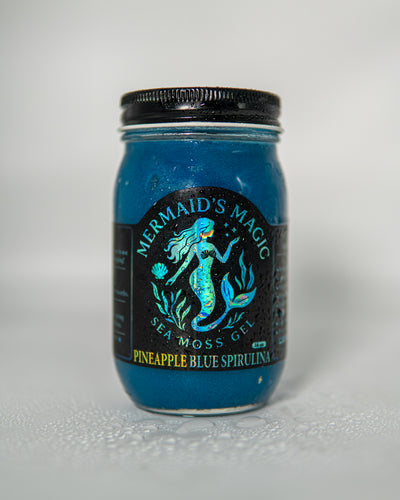
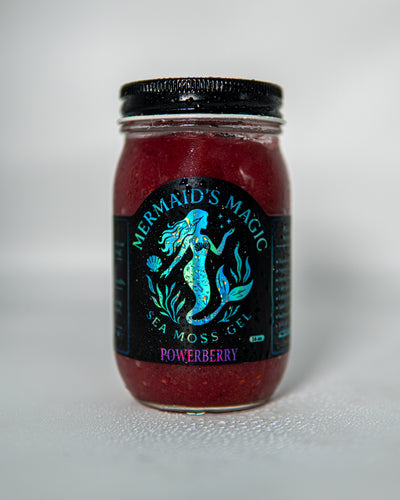
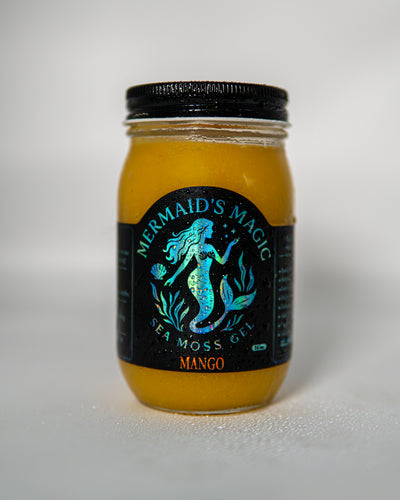
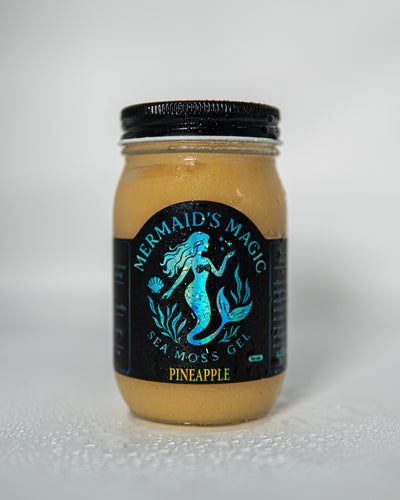
- Real whole fruit: Our fruit-infused gels contain actual whole fruit — real pineapple, real mango, real strawberry, real blueberry, real cherry. Not juice concentrates. Not "natural flavoring." Real fruit, blended directly into the gel. This is the difference that competitors like True Sea Moss and Herbal Vineyards do not match.
Why "Wild-Harvested" Claims Need Verification
One of the challenges in the sea moss market is that "wild-harvested" has become a marketing buzzword. Some sellers label their sea moss as wild-harvested regardless of its actual origin because they know consumers prefer it.
A study examining commercial seaweed products found that a significant percentage of products labeled as "wild" were actually farm-raised or could not be verified as wild-sourced (NIH, 2020). This is not unique to sea moss — similar labeling issues exist across the supplement industry.
How to protect yourself:
- Ask about the specific harvest location. A legitimate wild-harvester can tell you which region or coastline their sea moss comes from.
- Look for lab testing. Reputable brands invest in third-party testing and are willing to share results.
- Read reviews carefully. Customer reviews that mention gel quality, taste, and results can indicate whether a product delivers on its claims.
- Buy from established brands. Companies with a physical presence, verifiable history, and customer accountability are more likely to deliver genuine products than anonymous online sellers.
The Environmental Case for Responsible Wild Harvesting
Some people wonder whether wild harvesting is environmentally sustainable compared to farming. The answer depends entirely on how it is done.
Responsible wild harvesting — where harvesters take only a portion of each sea moss bed, cut above the holdfast (root structure), and rotate harvesting areas — is actually more environmentally sound than many farming operations. Wild sea moss beds support diverse marine ecosystems, and sustainable harvesting preserves these ecosystems while providing livelihoods for coastal communities.
Poorly managed farming operations, on the other hand, can create problems including:
- Introduction of non-native species to local waters
- Chemical runoff from tanks and treatment processes
- Displacement of natural marine habitats
- Genetic homogeneity that makes sea moss populations more vulnerable to disease
When you choose wild-harvested sea moss from a responsible brand, you are supporting both your health and the health of marine ecosystems. It is a choice that benefits everyone in the supply chain.
Making the Right Choice for Your Health
The difference between wild-harvested and pool-grown sea moss is not a minor detail. It fundamentally affects the mineral content, bioactive compounds, contamination risk, and overall quality of the product you are consuming. When you choose sea moss for its nutritional benefits — the 92 minerals, the anti-inflammatory polysaccharides, the prebiotic fiber — you need a product that actually contains those compounds in meaningful amounts.
Wild-harvested Caribbean sea moss, prepared as a fresh gel with real whole fruit, delivers the full nutritional promise of this remarkable marine plant. Cheap, farmed alternatives may look similar on the outside, but the difference becomes clear in the nutritional content and in the results you experience.
Ready to experience the difference that genuine, wild-harvested sea moss makes? Explore our collection of fruit-infused sea moss gels — every jar made with hand-harvested Caribbean sea moss and real whole fruit. Because what is inside your jar matters just as much as what is on the label.
Keep Reading
- The History of Sea Moss: From Caribbean Tradition to Modern Superfood
- What Is Sea Moss? The Complete Beginner's Guide to This Caribbean Superfood
- 15 Science-Backed Sea Moss Benefits You Need to Know
- Sea Moss Nutrition Facts: The Complete Mineral Breakdown
Ready to try sea moss? Shop our fruit-infused sea moss gel collection — made with real whole fruit, wild-harvested Caribbean sea moss, and nothing artificial.