Caribbean Sea Moss vs. Irish Sea Moss: What's the Real Difference?
Caribbean Sea Moss vs. Irish Sea Moss: What's the Real Difference?
If you've started researching sea moss, you've probably noticed that not all sea moss is the same. Some brands sell golden Caribbean sea moss, others offer purple or dark Irish moss, and the claims about which is "better" can be confusing. So what's the real difference between Caribbean sea moss vs Irish sea moss?
The answer goes beyond just color. These are actually different species of red algae, grown in different ocean environments, with meaningful differences in mineral content, texture, flavor, bioavailability, and how they're used. Understanding these differences is important if you want to make an informed choice about which sea moss product will give you the best results.
In this guide, we'll break down everything that separates Caribbean and Irish sea moss — from biology to practical daily use — so you can decide which type is right for your wellness goals.
Two Different Species: Caribbean Sea Moss vs Irish Sea Moss
The first thing to understand is that "Caribbean sea moss" and "Irish sea moss" typically refer to two distinct species of red algae:
Gracilaria (Caribbean/Golden Sea Moss)
Gracilaria is the species most commonly sold today as "sea moss." It grows naturally in warm, tropical waters — primarily throughout the Caribbean Sea, along the coasts of Jamaica, St. Lucia, Trinidad, and other islands, as well as parts of Central and South America, Africa, and Southeast Asia.
Key characteristics:
- Color: Golden, tan, or light yellow when dried. Some varieties appear light purple or multi-colored depending on their specific growing environment.
- Texture: Thinner, more delicate strands. When soaked and blended, produces a smoother, lighter gel.
- Flavor: Mild, almost neutral. Significantly less "seaweed-like" than Irish moss.
- Mineral profile: Absorbs a rich spectrum of minerals from warm volcanic rock formations and mineral-dense tropical waters.
Chondrus Crispus (Irish Moss)
Chondrus crispus is the original "Irish moss" — the species that has been harvested along the rocky coasts of Ireland, Scotland, Iceland, New England, and the Canadian Maritimes for centuries. This is the sea moss that sustained Irish coastal communities during the Great Famine.
Key characteristics:
- Color: Dark purple, reddish-brown, or deep green. Can appear almost black when dried.
- Texture: Thicker, more fan-shaped fronds. Produces a denser, heavier gel.
- Flavor: Stronger, more pronounced ocean/seaweed flavor.
- Mineral profile: Rich in carrageenan (a polysaccharide widely used in food manufacturing), with a mineral profile shaped by cold North Atlantic waters.
Where They Grow: Caribbean Sea Moss vs Irish Environments
The growing environment has a profound impact on the nutritional quality of sea moss. Just like wine grapes develop different flavors and compounds depending on the soil and climate (what the French call terroir), sea moss absorbs minerals directly from its surrounding water and the rocks it attaches to.
Caribbean Growing Conditions
Caribbean sea moss grows in warm, shallow tropical waters — typically between 75-85 degrees Fahrenheit. These waters flow over volcanic rock formations and coral reefs that are rich in trace minerals. The Caribbean Sea is one of the most mineral-diverse bodies of water on the planet, fed by numerous rivers carrying dissolved minerals from volcanic islands.
The warm temperatures and abundant sunlight promote longer growing seasons and more active mineral absorption. Sea moss harvested from these waters tends to have a broader, more complete mineral profile because of the diversity of geological elements it's exposed to.
North Atlantic Growing Conditions
Irish moss grows in cold, rough North Atlantic waters — typically between 40-60 degrees Fahrenheit. These waters are nutrient-rich in their own way, particularly in nitrogen and phosphorus, which support the growth of larger, denser fronds. However, the cold temperatures slow metabolic activity and mineral absorption compared to tropical varieties.
The rocky coastlines where Chondrus crispus grows are primarily composed of granite and basalt, which provide a different mineral mix than the volcanic formations of the Caribbean.
Mineral Content: Caribbean Sea Moss vs Irish Sea Moss Compared
Both species of sea moss are mineral-rich — that's a defining trait of red algae. However, the mineral profiles differ in meaningful ways.
Caribbean Gracilaria is often cited as containing 92 of the 102 essential minerals the human body needs. While this specific number is difficult to verify with a single lab test (mineral content varies by batch, location, and growing conditions), analysis of tropical red algae consistently shows exceptionally broad mineral diversity including:
- Iodine, selenium (thyroid support)
- Iron, B vitamins (energy production)
- Calcium, magnesium, phosphorus (bone health)
- Potassium, sodium (electrolyte balance)
- Zinc, vitamin C, vitamin A (immune support)
- Sulfur compounds (collagen and skin health)
- Trace minerals: manganese, chromium, molybdenum, copper
Irish Chondrus crispus also contains many of these minerals, but its standout compound is carrageenan — a sulfated polysaccharide that makes up a significant portion of its dry weight. Carrageenan is widely used in the food industry as a thickener and stabilizer (you'll find it in ice cream, plant milks, and processed foods). While carrageenan has some prebiotic properties, it has also been the subject of debate regarding its effects on gut inflammation when consumed in highly processed, extracted forms.
A comprehensive review in Marine Drugs examined the bioactive compounds in various red algae species and confirmed that tropical varieties tend to exhibit stronger antioxidant activity and broader mineral diversity compared to cold-water species.
Bioavailability: Which Sea Moss Delivers More Nutrients?
Bioavailability — how efficiently your body can absorb and use the nutrients in a food — is arguably the most important factor when comparing sea moss types.
Caribbean sea moss generally offers superior bioavailability for several reasons:
- Thinner cell walls: Gracilaria has more delicate cellular structures than Chondrus crispus, which means the minerals are released more easily during digestion.
- Smoother gel texture: When blended, Caribbean sea moss produces a lighter, smoother gel that your digestive system can process more efficiently. The denser gel from Irish moss requires more digestive effort to break down.
- Lower carrageenan concentration: While carrageenan itself is not harmful in whole-food form, the high concentration in Irish moss can create a very thick, mucus-like gel that some people find harder to digest. Caribbean sea moss produces a more balanced gel with a better ratio of minerals to carrageenan.
- Warm-water mineral chelation: Minerals absorbed by sea moss in warm tropical waters tend to be bound in organic forms that are more recognizable to the human digestive system, potentially enhancing absorption rates.
Taste and Texture: The Daily Experience
If you're going to take sea moss every day — and consistency is key to getting results — then taste and texture matter. A lot.
Caribbean Sea Moss Gel
When properly prepared, Caribbean sea moss gel has a mild, almost neutral flavor with a very subtle hint of the ocean. It's smooth, light, and blends effortlessly into smoothies, teas, and food without significantly altering the taste. Most people find it completely unobtrusive.
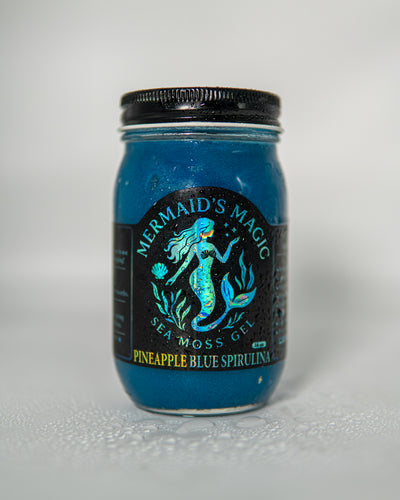
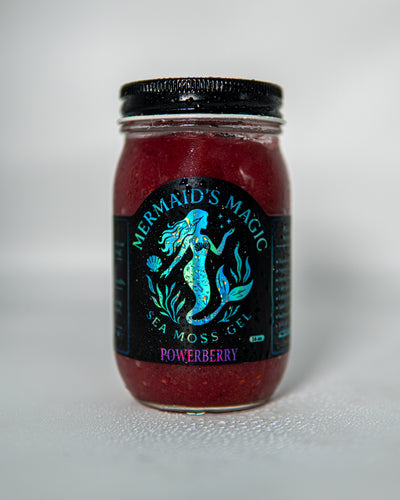
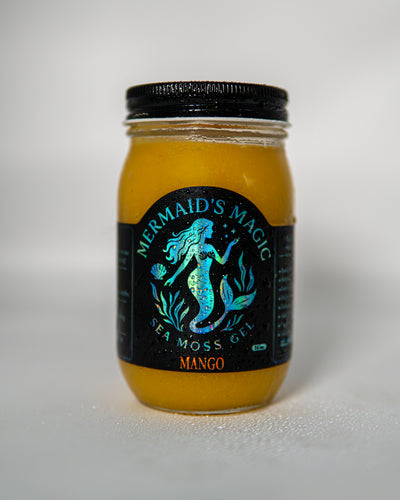
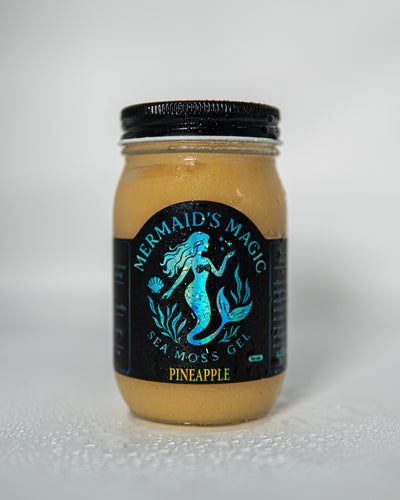
When blended with real fruit — like we do at Mermaid's Magic — it becomes genuinely enjoyable to eat. The light, smooth base of Caribbean sea moss gel pairs beautifully with tropical fruits like pineapple and mango.
Irish Moss Gel
Irish moss produces a thicker, denser gel with a more pronounced seaweed flavor. Some people describe it as "briny" or "fishy" — particularly when prepared at home without additional flavoring. The thick, gelatinous texture can be off-putting for people who are sensitive to food textures.
For cooking applications (like thickening soups or making desserts), the stronger gelling power of Irish moss can be an advantage. But for daily consumption — especially straight from the jar or in smoothies — Caribbean sea moss is the more user-friendly choice for most people.
Color Differences: What They Mean (and Don't Mean)
One of the most visible differences between Caribbean and Irish sea moss is color, and it's important to understand what color actually indicates.
Golden/tan (Caribbean Gracilaria): The golden color is natural and results from sun-drying in tropical climates. The warm water and abundant sunlight produce lighter pigmentation. This is not bleached or processed — it's the natural state of sun-dried tropical sea moss.
Purple/dark (Irish Chondrus crispus): The dark purple, red, or brownish color comes from higher concentrations of phycoerythrin — a red photosynthetic pigment that helps the algae absorb light in deeper, colder waters. This pigment has antioxidant properties, which is one of the nutritional advantages of Irish moss.
What to watch out for: Some sellers bleach dark sea moss to make it appear golden, believing consumers prefer the lighter color. Truly golden Caribbean sea moss should have a natural, slightly uneven color — not a uniform, bright white or yellow that looks artificially processed. If dried sea moss looks too perfect or too white, it may have been chemically treated.
Sustainability and Harvesting Practices
Both types of sea moss face sustainability challenges as demand has skyrocketed in recent years.
Wild-Harvested vs. Pool-Grown
The highest quality sea moss — whether Caribbean or Irish — is wild-harvested by hand from natural ocean environments. Harvesters carefully cut the sea moss above the holdfast (root), allowing it to regrow naturally. This method is labor-intensive but sustainable when practiced responsibly.
As demand has increased, pool-farming (also called ocean-farming or aquaculture) has become more common, particularly for Caribbean Gracilaria. Pool-grown sea moss is cultivated on ropes or in shallow pools rather than growing naturally on ocean rocks. While this method is more scalable, it typically produces sea moss with:
- Lower mineral content (the pools don't replicate the mineral diversity of the open ocean)
- Thinner, more fragile strands
- Less nutritional value per serving
- Potential exposure to agricultural runoff or chemicals
At Mermaid's Magic, we exclusively source wild-harvested Caribbean sea moss from trusted harvesters who practice sustainable harvesting methods. Every batch is lab-tested for heavy metals and contaminants to ensure both safety and quality.
Irish Moss in the Commercial Food Industry
It's worth noting that Chondrus crispus has a major role in the commercial food industry that most consumers don't see. The carrageenan extracted from Irish moss is used as a thickener, stabilizer, and emulsifier in thousands of processed food products worldwide — from ice cream and chocolate milk to deli meats and toothpaste.
This industrial demand has led to large-scale harvesting of Chondrus crispus that has raised sustainability concerns in some regions. Ireland and Canada have implemented harvesting regulations to protect wild populations, but the pressure remains significant.
When you buy whole Irish moss for personal use, you're getting the complete, unprocessed algae — very different from the extracted, processed carrageenan found in food additives. The health debate around carrageenan primarily concerns the isolated, processed form, not whole-food sea moss consumed in traditional amounts.
Why Mermaid's Magic Uses Caribbean Sea Moss
We chose Caribbean Gracilaria as the foundation of our sea moss gels for several specific reasons:
- Broader mineral profile — The warm, mineral-rich Caribbean waters produce sea moss with exceptional mineral diversity.
- Superior bioavailability — The lighter cellular structure means better nutrient absorption for our customers.
- Better taste and texture — The mild, neutral flavor of Caribbean sea moss blends beautifully with our real whole fruit. It creates a smooth, enjoyable gel that people actually look forward to eating daily.
- Sustainable sourcing relationships — We've established direct relationships with Caribbean harvesters who practice responsible, sustainable wild-harvesting methods.
- Cultural tradition — Sea moss gel as a daily wellness food originates in Caribbean culture. Using Caribbean-sourced sea moss honors that tradition.
We then combine this premium Caribbean sea moss with real whole fruit — not the juice concentrates or "natural flavoring" that many competitors use. The result is a sea moss gel that delivers maximum nutritional benefit in a form that tastes genuinely delicious. Browse our full collection to find your flavor.
Which Type of Sea Moss Should You Choose?
Here's a simple decision framework:
Choose Caribbean (Gracilaria) sea moss if:
- You want the broadest possible mineral profile
- Superior bioavailability is important to you
- You prefer a mild flavor and smooth texture
- You plan to eat it daily in smoothies, tea, or straight from the jar
- You want a gel that blends well with fruit and other foods
- You're new to sea moss and want the most accessible starting point
Choose Irish (Chondrus crispus) sea moss if:
- You specifically want high carrageenan content for cooking/thickening
- You prefer a stronger seaweed flavor
- You're interested in the phycoerythrin antioxidants unique to purple sea moss
- You have a specific cultural or traditional preference for Irish moss
The bottom line: Both types of sea moss are nutritious, both have long histories of traditional use, and both can support your wellness goals. However, for daily consumption as a gel — especially one that you'll actually enjoy taking every single day — Caribbean golden sea moss is the preferred choice for most people, and it's what we use at Mermaid's Magic.
Still not sure which sea moss product is right for you? Take our product quiz or explore our guide to what sea moss is and how to get started.
Ready to try sea moss? Shop our fruit-infused sea moss gel →
These statements have not been evaluated by the Food and Drug Administration. This product is not intended to diagnose, treat, cure, or prevent any disease.
Keep Reading
- The History of Sea Moss: From Caribbean Tradition to Modern Superfood
- What Is Sea Moss? The Complete Beginner's Guide to This Caribbean Superfood
- 15 Science-Backed Sea Moss Benefits You Need to Know
- Sea Moss Nutrition Facts: The Complete Mineral Breakdown
Ready to try sea moss? Shop our fruit-infused sea moss gel collection — made with real whole fruit, wild-harvested Caribbean sea moss, and nothing artificial.