Sea Moss Knowledge Hub
How to Choose the Best Sea Moss Gel Brand in 2026
The sea moss gel market has grown dramatically over the past four years, and with that growth has come a flood of new brands ranging from genuinely excellent to outright misleading. If you are trying to identify the best sea moss gel brand for your health and wellness goals, the sheer number of options — and the similarity of their marketing claims — can make the decision genuinely difficult. This guide walks through the objective criteria that separate a high-quality sea moss gel from a low-quality one, so you can evaluate any brand, including ours, on its actual merits.
Why Brand Selection Matters More Than Most People Realize
Sea moss gel looks similar from brand to brand. It is typically a smooth, gelatinous substance that comes in a jar, often with fruit flavoring, and is marketed with broadly similar wellness claims: minerals, gut health support, energy, immunity, skin benefits. Reading label copy alone, many brands seem roughly equivalent.
They are not. The difference between a sea moss gel made with wild-harvested Caribbean sea moss and real whole fruit versus one made with pool-grown algae and synthetic "natural flavoring" is enormous — in nutritional density, in safety, and in whether you are actually getting the product the marketing describes. Because most consumers cannot tell the difference from looking at a jar, disreputable producers have entered the market knowing their shortcuts will largely go undetected.
Understanding what to look for is the first line of defense. Let us work through the criteria systematically.
Criterion 1: Sourcing — Wild-Harvested vs. Pool-Grown
This is the single most important quality criterion for sea moss gel, and it is the one that most brands either obscure or misrepresent.
Wild-harvested sea moss is gathered from the ocean — specifically, from the warm, mineral-rich shallow waters of the Caribbean Sea, where Gracilaria and related species grow naturally on rocks and coral substrates, absorbing minerals directly from seawater. This natural growing environment is what gives genuine sea moss its mineral density. When people talk about the mineral richness that has become associated with sea moss, they are referring to wild-harvested, ocean-grown sea moss.
Pool-grown sea moss — also called tank-cultivated or aquaculture sea moss — is produced by growing sea moss in controlled freshwater or saltwater tanks, typically on ropes or nets, with minimal mineral exposure. It grows faster, is cheaper to produce, and can be manufactured at industrial scale. However, its mineral content is dramatically lower than wild-harvested sea moss because it is not absorbing minerals from an open ocean environment. It looks almost identical to wild-harvested sea moss once processed into gel.
A trustworthy brand states clearly that its sea moss is wild-harvested and specifies the region of origin. Evasive language like "sourced sustainably" or "premium sea moss" without specifics is a warning sign. Ask directly if you cannot find the information on the website: where, specifically, was this sea moss grown? If the answer is unclear or defensive, consider it pool-grown until proven otherwise.
Criterion 2: Clean Sourcing and Careful Preparation
Sea moss is a bioaccumulator — it absorbs minerals from its environment, which is exactly what makes wild-harvested sea moss so nutritionally valuable. The downside of this property is that sea moss harvested from polluted or compromised waters can also absorb pollutants, including arsenic, lead, cadmium, and mercury.
Reputable sea moss brands are open about where their sea moss is harvested and how it is prepared. Iodine content matters too: it should be high enough to be nutritionally meaningful, not so high as to pose thyroid risk at standard doses.
What to look for: a clear answer on where the sea moss comes from, how it is dried and cleaned, and where the gel is made. The best brands publish these on their websites or provide them on request without hesitation. If a brand cannot or will not tell you where its sea moss comes from or how it is made, you have no way to judge the product. This is non-negotiable for any supplement you plan to consume regularly.
Scientific literature, including analyses available through the National Library of Medicine, consistently notes that ocean water quality varies across harvesting regions, which is why origin matters.
Criterion 3: Real Fruit vs. "Natural Flavoring"
Most sea moss gels are flavored, because plain sea moss gel has a mild but distinctly oceanic taste that many people find challenging to consume straight. How a brand approaches flavoring tells you a great deal about its overall quality philosophy.
The best brands use real whole fruit — actual strawberries, actual pineapple, actual mango, actual blueberries — blended directly into the gel. This approach costs more and requires careful handling to maintain freshness and shelf stability, but it provides genuine nutritional contribution from the fruit (additional antioxidants, vitamins, and flavor compounds) and ensures the product tastes like what it claims to taste like.
Lower-quality brands use fruit juice concentrates — a processed, partially dehydrated form of fruit that has been stripped of much of its fiber and many of its phytonutrients. Some brands go further and use "natural flavoring" — a term regulated by the FDA that can apply to flavoring derived from almost any natural source, including fermentation byproducts and other compounds that have no meaningful connection to the named fruit. You may see "strawberry flavored" sea moss gel that contains not a single gram of actual strawberry.
The label will tell you the truth if you know how to read it. Look for the actual fruit in the ingredients list: "strawberries," "pineapple," "mango." If you see "natural strawberry flavor," "strawberry flavor," or any variation on "natural flavoring" without the actual fruit listed, the gel is flavored but not fruited — a meaningful difference.
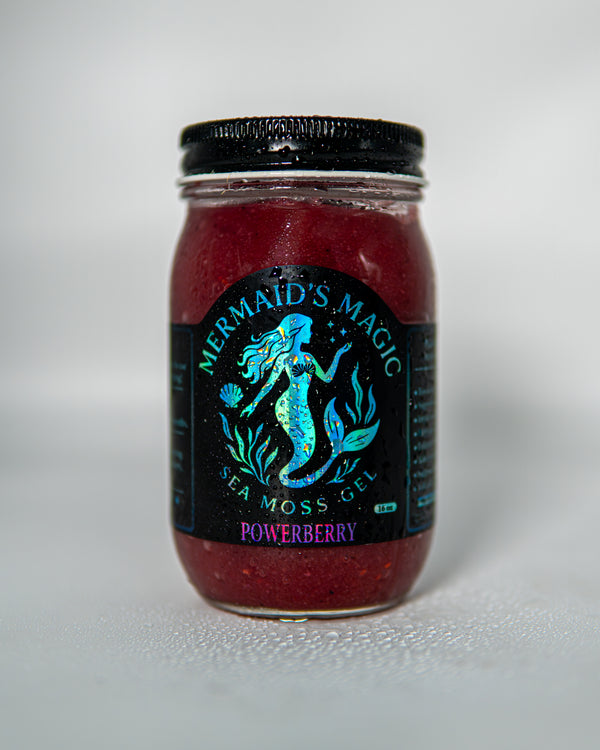
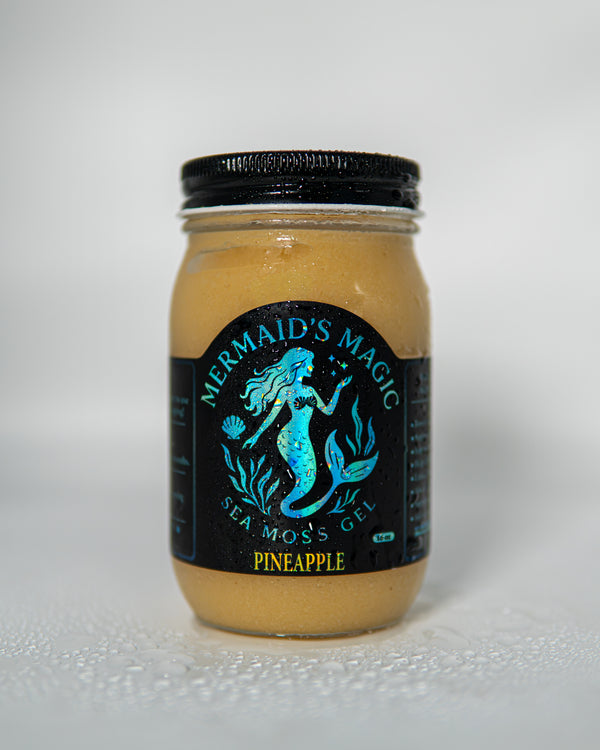
At Mermaid's Magic Sea Moss, this is something we feel strongly about. Our competitors — including large-scale brands like True Sea Moss and Herbal Vineyards — use juice concentrates or natural flavoring. We use real whole fruit. That is our core quality commitment and the reason customers who have tried both notice an immediate difference in taste, texture, and how they feel.
Criterion 4: Ingredient Transparency and Label Honesty
Read the full ingredients list, not just the front-of-pack claims. A high-quality sea moss gel should have a short, clean ingredients list: sea moss, water, fruit (or specific fruits by name), and perhaps a natural preservative like lime or lemon juice. If the ingredients list is long, includes gums or stabilizers, contains preservatives beyond citric acid or lemon juice, or lists things you cannot identify without a chemistry degree, approach with skepticism.
Also check the serving size and the amount of sea moss per serving. Some products dilute sea moss gel with water or other fillers to reduce cost while maintaining the appearance of a "full jar" of gel. If the sea moss content is not clearly stated, the serving size is unusually large for the claimed benefits, or the price seems too good to be true for the jar size, these are indicators of dilution.
Honest brands tell you exactly what is in the product, where the sea moss comes from, and how it is made. This transparency is both a quality signal and a trust signal. A brand that has nothing to hide does not hide anything.
Criterion 5: Verified Customer Reviews and Real-World Track Record
A brand's review profile is imperfect but useful evidence. Look for reviews that are specific — describing actual experiences with digestion, energy, skin, taste — rather than generic five-star endorsements. Look for a consistent volume of reviews over time rather than a sudden surge. Check for verified buyer badges or third-party review platforms that make gaming harder.
Be appropriately skeptical of brands with thousands of reviews but no specific feedback, or brands that only show reviews on their own website without any third-party platform presence. Conversely, a brand with a smaller but highly specific, consistently positive review base — particularly from repeat customers — is often a more reliable quality signal than a brand with massive review volume.
Also pay attention to how a brand responds to negative reviews. A brand that engages thoughtfully with criticism, acknowledges problems, and demonstrates accountability is one that takes quality seriously. A brand that ignores or dismisses negative feedback rarely improves.
Criterion 6: Price as a Quality Signal
Wild-harvested sea moss, real whole fruit, careful small-batch preparation, and responsible production all cost money. A sea moss gel that is priced significantly below market rates is almost certainly cutting corners somewhere — whether on sourcing, ingredients, preparation, or all three.
This does not mean the most expensive brand is the best brand. It means that an unusually cheap product should prompt questions: What is the sea moss source? How is it prepared? What is the flavoring? The answers will generally explain the low price.
A reasonable price range for a high-quality, 16-ounce jar of wild-harvested, real-fruit sea moss gel in 2026 is approximately $35–$55, depending on flavor complexity and production costs. Prices significantly below this range for the same volume should prompt scrutiny.
Red Flags: What to Avoid
- No sourcing information: If the brand cannot tell you where the sea moss was harvested, assume pool-grown.
- No clear sourcing information: If a brand won't say where its sea moss comes from, you can't judge its quality.
- "Natural flavoring" instead of real fruit: You are paying for the sea moss name and a manufactured approximation of fruit.
- Unusually low price for the volume: Quality has a cost. Corners are being cut somewhere.
- Vague claims without specifics: "Premium" and "pure" without any details on sourcing or ingredients are meaningless.
- No return or satisfaction policy: A brand confident in its product offers some form of guarantee.
- Sea moss listed far down the ingredients list: Suggests heavy dilution with water or other fillers.
Evaluating Mermaid's Magic Against These Criteria
We built Mermaid's Magic Sea Moss around these exact principles because we believe they are what make a sea moss product worth buying. Here is how we measure up against the criteria in this guide:
- Sourcing: Wild-harvested Caribbean sea moss. We specify origin clearly and do not use pool-grown algae.
- Preparation: Our sea moss is sun-dried, then cleaned and blended in small batches in our FDA-registered kitchen in Pensacola, Florida. Certificates of Analysis are available on request.
- Real fruit: Every flavored gel we produce uses real whole fruit — actual strawberries, pineapple, mango, blueberries. No concentrates, no "natural flavoring."
- Ingredient transparency: Short, clean ingredients lists. Sea moss, water, real fruit, citrus for preservation. Nothing hidden, nothing vague.
- Reviews: Verified customer reviews with an average rating above 4.9, with specific feedback about taste, digestion, energy, and skin. Many repeat customers.
- Price: Competitive with the quality tier. We charge fairly for what we provide and do not cut corners to appear cheaper.
We are also a small, direct-to-consumer brand based in Pensacola, Florida. We sell at farmers markets in Milton, Navarre, and Miramar Beach — in person, to the same community members week after week. That accountability is built into everything we make.
For a detailed look at how we compare to two of the largest brands in the market, see our guide on real fruit versus natural flavoring: what your sea moss gel brand is actually using.
Final Checklist: Questions to Ask Before You Buy
- Is the sea moss wild-harvested or pool-grown? From where?
- Does the brand tell you where its sea moss is harvested? Is the full ingredient list on the label?
- Does the product use real whole fruit, juice concentrate, or "natural flavoring"?
- Is sea moss listed early in the ingredients list (indicating it is the primary ingredient)?
- What do verified customer reviews say about real-world effects?
- Is the price consistent with the quality claims being made?
- Does the brand communicate transparently about sourcing and production?
Any brand worth buying will answer all of these questions clearly and confidently. The ones that deflect or dodge deserve your skepticism.
Ready to Try the Real Thing?
Wild-harvested Caribbean sea moss. Real whole fruit. Made in small batches. No concentrates, no shortcuts, no "natural flavoring." This is what the best sea moss gel should be — and it is exactly what we make.
Keep Reading
- How to Use Sea Moss Gel: 10 Easy Ways to Add It to Your Daily Routine
- DIY Sea Moss Face Mask: 5 Recipes for Glowing Skin
- 5 Delicious Sea Moss Smoothie Recipes You'll Actually Crave | Mermaid's Magic Sea Moss
- How to Store Sea Moss Gel (And How Long It Actually Lasts)
Ready to try sea moss? Shop our fruit-infused sea moss gel collection — made with real whole fruit, wild-harvested Caribbean sea moss, and nothing artificial.