92 Minerals in Sea Moss: The Complete List Explained
Sea Moss Knowledge Hub
92 Minerals in Sea Moss: The Complete List Explained
You have heard that sea moss contains 92 of the 102 essential minerals the human body needs, but what are those minerals, and what do they actually do? This is the most comprehensive sea moss minerals list available — a complete guide to the nutritional powerhouse hiding in every spoonful of sea moss gel.
Why 92 Minerals Matters
The human body requires approximately 102 minerals to function optimally. These minerals are involved in everything from bone formation and nerve signaling to hormone production and immune defense. Most foods provide a handful of these minerals. A typical multivitamin might contain 15 to 20. Sea moss delivers 92 — nearly the entire spectrum — in a single, natural, whole-food source.
This is not a marketing claim. It is a reflection of how sea moss grows. As a marine algae, sea moss absorbs minerals directly from the ocean water it lives in. The ocean contains virtually every naturally occurring mineral element on Earth, and sea moss acts like a living sponge, concentrating these minerals in its cell structure. When you consume sea moss gel, you are accessing the mineral wealth of the ocean in a form your body can readily use.
What makes this especially significant is that these minerals arrive in their natural, bioavailable form — not as isolated synthetic compounds. They come with their natural cofactors and in the ratios that nature intended, which means your body absorbs and utilizes them far more efficiently than it would from a pill.
The Major Minerals (Macrominerals)
These are the minerals your body needs in the largest quantities. They form the structural foundation of bones, regulate fluid balance, and drive hundreds of enzymatic reactions.
1. Calcium
The most abundant mineral in the human body. Essential for bone and tooth structure, muscle contraction, nerve signaling, and blood clotting. Sea moss provides calcium alongside its necessary cofactors — magnesium, phosphorus, and vitamin K — for optimal absorption and utilization.
2. Magnesium
Involved in over 300 enzymatic reactions. Supports energy production, muscle and nerve function, blood sugar regulation, blood pressure control, and protein synthesis. Magnesium deficiency is one of the most common nutritional deficiencies in the modern world, affecting an estimated 50 percent of Americans.
3. Potassium
Critical for heart function, muscle contraction, nerve transmission, and fluid balance. Potassium helps counteract the blood pressure-raising effects of sodium. Most Americans consume far less potassium than recommended.
4. Sodium
While excess sodium is a concern in modern diets, your body requires a baseline amount for nerve function, muscle contraction, and fluid balance. Sea moss provides sodium in naturally balanced amounts alongside potassium.
5. Phosphorus
Works with calcium to form the mineral matrix of bones and teeth. Also essential for energy production (ATP), DNA synthesis, and acid-base balance in the blood.
6. Sulfur
A building block of amino acids (methionine and cysteine), collagen, and keratin. Supports joint health, skin elasticity, hair strength, and detoxification processes. Sea moss is one of the richest natural sources of bioavailable sulfur.
7. Chloride
Works with sodium to maintain fluid balance and is a component of stomach acid (hydrochloric acid), which is necessary for proper digestion and nutrient absorption.
The Essential Trace Minerals
Trace minerals are needed in smaller quantities but are no less important. Many serve as catalysts for critical biochemical reactions.
8. Iron
Carries oxygen in the blood via hemoglobin and supports energy production in every cell. Iron deficiency is the most common nutritional deficiency worldwide, causing fatigue, weakness, and impaired cognitive function.
9. Zinc
Essential for immune function, wound healing, DNA synthesis, taste and smell perception, and testosterone production. The body does not store zinc, so daily intake is critical.
10. Iodine
Required for thyroid hormone production, which regulates metabolism, energy, body temperature, and growth. Sea moss is one of the richest natural food sources of iodine available.
11. Selenium
A powerful antioxidant that protects cells from oxidative damage. Supports thyroid function, immune defense, and reproductive health. Works synergistically with vitamin E.
12. Manganese
Supports bone formation, blood clotting, metabolism of amino acids and carbohydrates, and the function of superoxide dismutase — one of the body's most important antioxidant enzymes.
13. Copper
Necessary for iron absorption, red blood cell formation, immune function, nerve health, and collagen production. Works in partnership with iron and zinc.
14. Chromium
Enhances insulin function, helping your body regulate blood sugar levels. Important for carbohydrate, fat, and protein metabolism.
15. Molybdenum
A cofactor for enzymes involved in sulfur metabolism and the breakdown of toxic sulfites. Also supports the metabolism of drugs and toxins in the liver.
16. Cobalt
A component of vitamin B12, which is essential for red blood cell formation, neurological function, and DNA synthesis.
17. Fluoride
Supports the mineralization of bones and tooth enamel. Present in sea moss in naturally occurring trace amounts.
18. Boron
Supports bone health by reducing calcium excretion and supporting the body's use of vitamin D. Also plays a role in brain function and the metabolism of steroid hormones including estrogen and testosterone.
19. Silicon
Supports collagen synthesis, bone mineralization, and the health of connective tissues including skin, hair, nails, and blood vessels.
20. Vanadium
May support healthy blood sugar levels by mimicking the effects of insulin. Research is ongoing, but vanadium is recognized as a trace nutrient of emerging importance.
Additional Trace and Ultra-Trace Minerals in Sea Moss
Beyond the 20 well-studied minerals above, the full sea moss minerals list extends to include dozens of additional trace and ultra-trace elements. While research on many of these is still developing, they are present in sea moss because they are present in ocean water, and the human body has evolved in relationship with these elements for millions of years.
Here is the extended list of minerals identified in quality, wild-harvested sea moss:
- Aluminum — present in ultra-trace amounts; involved in certain enzymatic functions
- Antimony — ultra-trace element found in ocean water
- Arsenic — present in organic, non-toxic form in marine plants (distinct from toxic inorganic arsenic)
- Barium — trace ocean element
- Beryllium — ultra-trace element
- Bismuth — trace element with potential gut-soothing properties
- Bromine — supports tissue development; present naturally in seawater
- Cadmium — ultra-trace amounts in marine environments
- Cerium — rare earth element; antioxidant properties under research
- Cesium — ultra-trace element
- Dysprosium — rare earth element
- Erbium — rare earth element
- Europium — rare earth element
- Gadolinium — rare earth element
- Gallium — trace element with emerging biological interest
- Germanium — trace element; antioxidant properties under study
- Gold — ultra-trace element found in seawater
- Hafnium — ultra-trace element
- Holmium — rare earth element
- Indium — ultra-trace element
- Lanthanum — rare earth element
- Lead — present in ultra-trace amounts; lab testing ensures safe levels
- Lithium — trace element associated with mood regulation and neurological health
- Lutetium — rare earth element
- Neodymium — rare earth element
- Nickel — trace element involved in iron absorption and enzyme function
- Niobium — ultra-trace element
- Osmium — ultra-trace element
- Palladium — ultra-trace element
- Platinum — ultra-trace element
- Praseodymium — rare earth element
- Rhenium — ultra-trace element
- Rhodium — ultra-trace element
- Rubidium — trace element; may support serotonin balance
- Ruthenium — ultra-trace element
- Samarium — rare earth element
- Scandium — ultra-trace element
- Silver — ultra-trace element with known antimicrobial properties
- Strontium — supports bone density; closely related to calcium in function
- Tantalum — ultra-trace element
- Tellurium — ultra-trace element
- Terbium — rare earth element
- Thallium — ultra-trace element
- Thorium — ultra-trace element
- Thulium — rare earth element
- Tin — trace element; may play a role in growth and tissue repair
- Titanium — ultra-trace element
- Tungsten — ultra-trace element
- Uranium — ultra-trace element naturally present in seawater
- Ytterbium — rare earth element
- Yttrium — rare earth element
- Zirconium — ultra-trace element
Many of these ultra-trace elements are present in extremely small amounts. Their individual roles in human health are still being studied, but the prevailing scientific perspective is that the body functions best when it has access to the full spectrum of naturally occurring elements — in the trace amounts found in whole foods, not in concentrated supplemental doses.
Why Wild-Harvested Sea Moss Has More Minerals
Not all sea moss is equal when it comes to mineral content. The sea moss minerals list above represents what you find in quality, wild-harvested sea moss that has grown naturally in mineral-rich Caribbean waters. Pool-grown or farmed sea moss, by contrast, grows in controlled environments where the water composition is limited and often lacks the full spectrum of ocean minerals.
Wild-harvested sea moss absorbs minerals from the ever-changing, mineral-dense ocean currents. The longer it grows in its natural environment, the more minerals it accumulates. This is why wild-harvested sea moss consistently tests higher in mineral content than its farm-raised counterpart.
Mermaid's Magic sources exclusively wild-harvested sea moss from the Caribbean. Every batch is lab tested to verify its mineral content and to ensure it is free from heavy metal contamination, bacteria, and other impurities. When we say our sea moss gel contains 92 essential minerals, that claim is backed by actual laboratory analysis — not just marketing.
How Your Body Uses These Minerals Together
One of the most important things to understand about the minerals in sea moss is that they do not work in isolation. They function as an interconnected network where each mineral supports and enhances the others.
- Calcium and magnesium must be present together for proper bone formation. Too much calcium without magnesium leads to calcification of soft tissues.
- Iron and copper work together for red blood cell production. Without copper, your body cannot properly transport and utilize iron.
- Zinc and selenium both support immune function and thyroid health, but through different mechanisms that complement each other.
- Iodine and selenium are both required for proper thyroid hormone production and conversion.
- Potassium and sodium must be balanced for proper nerve function, muscle contraction, and blood pressure regulation.
This is the fundamental advantage of getting your minerals from a whole-food source like sea moss rather than from isolated supplements. Sea moss provides these minerals in the natural ratios and relationships that your body has evolved to use. You do not need to figure out which minerals to combine or worry about one supplement blocking the absorption of another — nature has already optimized the formula.
How Many Minerals Do You Get Per Serving?
A typical serving of sea moss gel is 1 to 2 tablespoons per day. While the exact mineral content varies by batch and source, here are approximate values for key minerals per tablespoon of quality sea moss gel:
- Iodine: 47 to 93 mcg (31 to 62 percent of daily value)
- Iron: 1 to 2 mg (6 to 11 percent of daily value)
- Magnesium: 12 to 24 mg (3 to 6 percent of daily value)
- Calcium: 7 to 14 mg (1 to 2 percent of daily value)
- Potassium: 15 to 30 mg (less than 1 percent of daily value)
- Zinc: 0.2 to 0.5 mg (2 to 5 percent of daily value)
- Selenium: 1 to 3 mcg (2 to 5 percent of daily value)
These numbers may look modest individually, but remember — you are getting all 92 minerals simultaneously, in bioavailable form, as part of a food you consume daily. Over weeks and months of consistent use, these minerals accumulate in your body's reserves and create a foundation of nutritional resilience that you cannot achieve with any single supplement.
Minerals Your Body Cannot Make
It is worth emphasizing that your body cannot manufacture minerals. Unlike vitamins — some of which your body can synthesize (vitamin D from sunlight, vitamin K from gut bacteria) — every single mineral must come from external sources. You must eat them or drink them. There is no other way.
This is what makes sea moss such a powerful addition to any diet. In a single spoonful, you are providing your body with nearly the entire mineral palette it needs to function — from the major macrominerals that build your bones to the ultra-trace elements that catalyze your enzymes.
Try Mermaid's Magic Sea Moss Gel
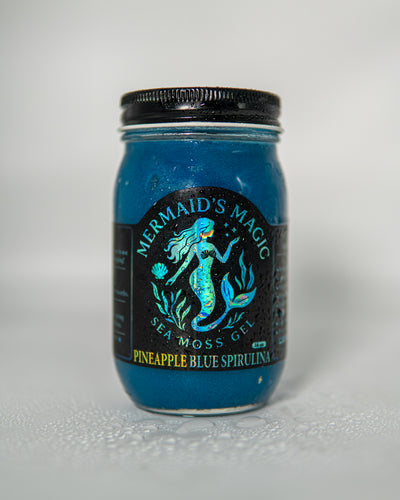
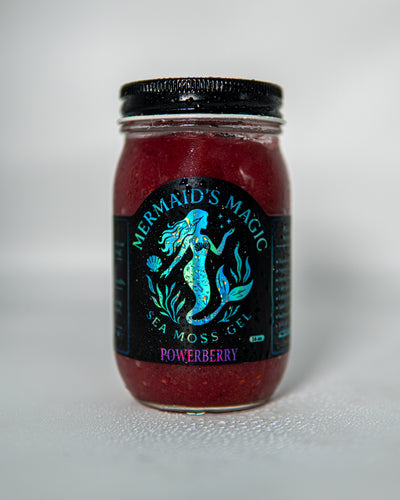
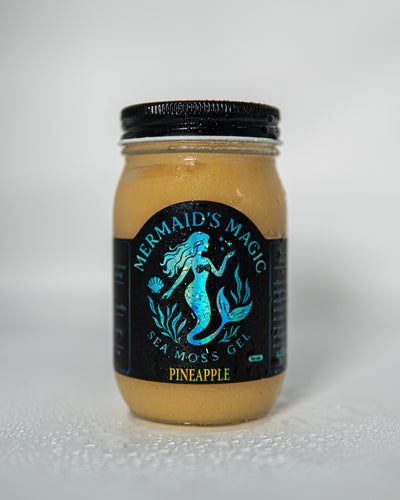
Experience the full spectrum of 92 minerals in every jar. Mermaid's Magic sea moss gel is wild-harvested from the Caribbean, lab tested for mineral content and purity, and prepared with real whole fruit in our FDA-registered kitchen in Pensacola, Florida. Vegan, non-GMO, and free of preservatives. Available in mango, strawberry, blueberry, cherry, pineapple, pineapple blue spirulina, and power berry. Free shipping on orders over $100.