Sea Moss Knowledge Hub
Sea Moss Gel Scams: How to Spot Fake Products
The explosive growth of the sea moss market has brought an unfortunate side effect: sea moss gel scams. From pool-farmed moss sold as "wild-harvested" to gels padded with cheap fillers, the market is flooded with products that don't deliver what they promise. This guide will teach you exactly how to spot fake and low-quality sea moss products so you can protect your health and your wallet.
Why Sea Moss Scams Are So Common
Sea moss has become one of the fastest-growing wellness products in the United States. Social media influencers, celebrity endorsements, and viral TikTok videos have driven demand to unprecedented levels. Where there's demand and money, there are inevitably people looking to cut corners.
Several factors make the sea moss market particularly vulnerable to scams:
- Low barrier to entry — anyone can buy bulk sea moss, blend it with water, jar it, and sell it online without any certification or oversight
- Consumer knowledge gap — most buyers are new to sea moss and don't know what to look for
- Difficulty verifying claims — consumers can't easily verify whether sea moss is wild-harvested or pool-farmed, or made in a proper facility or a home kitchen
- Premium pricing — the high price point of quality sea moss creates a profit incentive for cutting corners
Understanding the most common types of sea moss gel scams is the first step toward protecting yourself.
Scam #1: Pool-Farmed Sea Moss Sold as Wild-Harvested
This is the most widespread deception in the sea moss industry. Wild-harvested sea moss commands a premium price because it grows in the open ocean, absorbing a diverse range of minerals from the seawater. Pool-farmed sea moss, on the other hand, is grown in artificial pools or tanks — often on ropes — in a controlled environment that produces a far less nutrient-dense product.
How to Spot It
- Uniform appearance — pool-farmed sea moss tends to be very uniform in color and size. Wild sea moss has natural variation in color, shape, and thickness because it grows in an uncontrolled ocean environment.
- Lighter color — pool-farmed sea moss is often lighter and more uniform in color (often pale yellow or golden) compared to the deeper, more varied hues of wild-harvested moss.
- Salt content — pool-farmed sea moss is often excessively salty because it's grown in salt water without the natural ocean currents that wild moss experiences.
- Thicker, more uniform strands — wild sea moss has varied strand thickness and natural imperfections. Pool-farmed moss often has suspiciously uniform, thick strands.
- Price — if the price seems too good to be true for "wild-harvested" sea moss, it probably is. Wild harvesting is labor-intensive and more expensive than pool farming.
Scam #2: Artificial Ingredients Disguised as Real Fruit
Many brands claim their sea moss gel is made with "real fruit" when it actually contains juice concentrates, artificial flavoring, food coloring, or cheap fruit powders. The difference matters — both nutritionally and in terms of what you're paying for.
How to Spot It
- Read the ingredient list carefully — look for terms like "natural flavoring," "fruit concentrate," "fruit powder," or artificial color names (Red 40, Blue 1, etc.)
- Overly vibrant or uniform color — real fruit creates natural color variation. Artificially colored gels often have an unnaturally uniform, bright color.
- Taste test — real fruit-blended sea moss gel has a complex, natural fruit flavor. Artificial flavoring tends to taste one-dimensional and overly sweet.
- Price consistency — real fruit costs more than artificial flavoring. If flavored gels are the same price as plain gel, they may not contain real fruit.
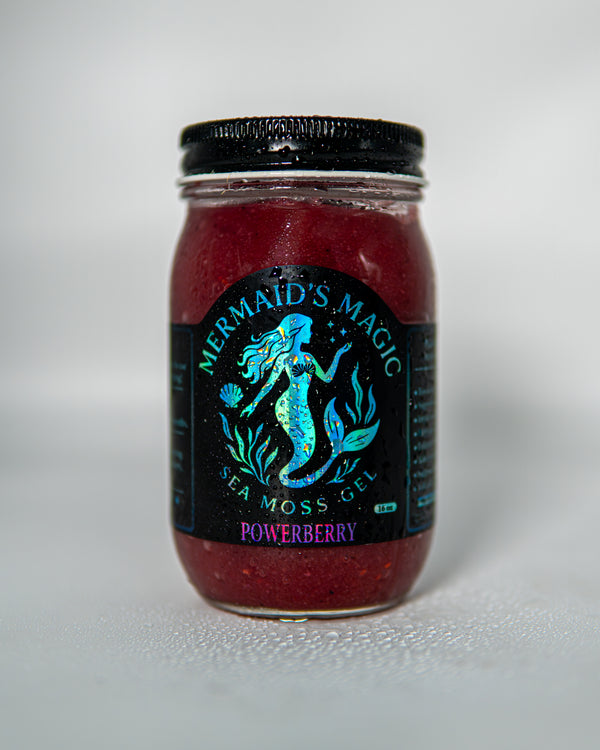
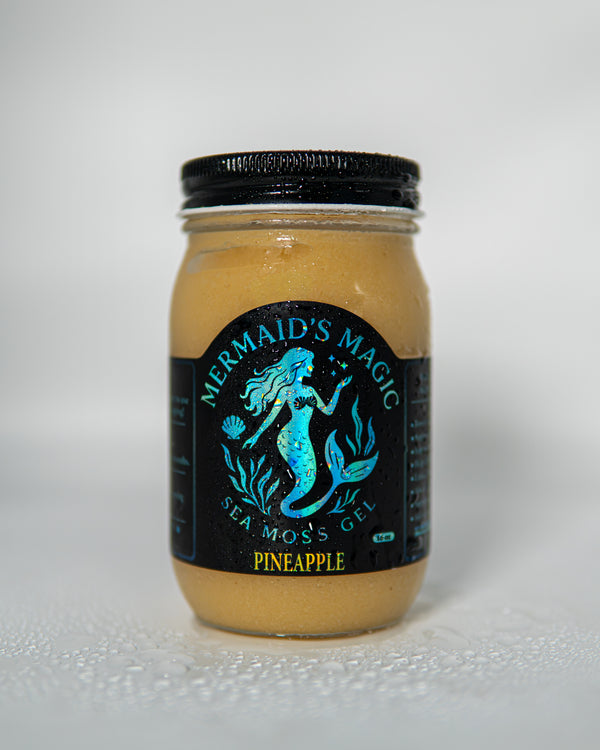
At Mermaid's Magic, we use real whole fruit in every flavored gel — actual mangoes, strawberries, blueberries, and pineapples. Not concentrates, not powders, not "natural flavoring." Real fruit, period.
Scam #3: Fillers and Thickeners
Some unscrupulous producers stretch their sea moss gel by adding fillers and thickeners that give the appearance of a thick, rich gel while dramatically reducing the actual sea moss content. Common fillers include:
- Xanthan gum — a common food thickener that mimics gel consistency
- Guar gum — another thickening agent used to bulk up gel volume
- Cornstarch — a cheap thickener that adds body without nutrition
- Excessive water — simply adding more water than sea moss creates a diluted product
- Commercial carrageenan — processed, food-grade carrageenan powder can be added to create a gel-like texture without using actual sea moss
How to Spot It
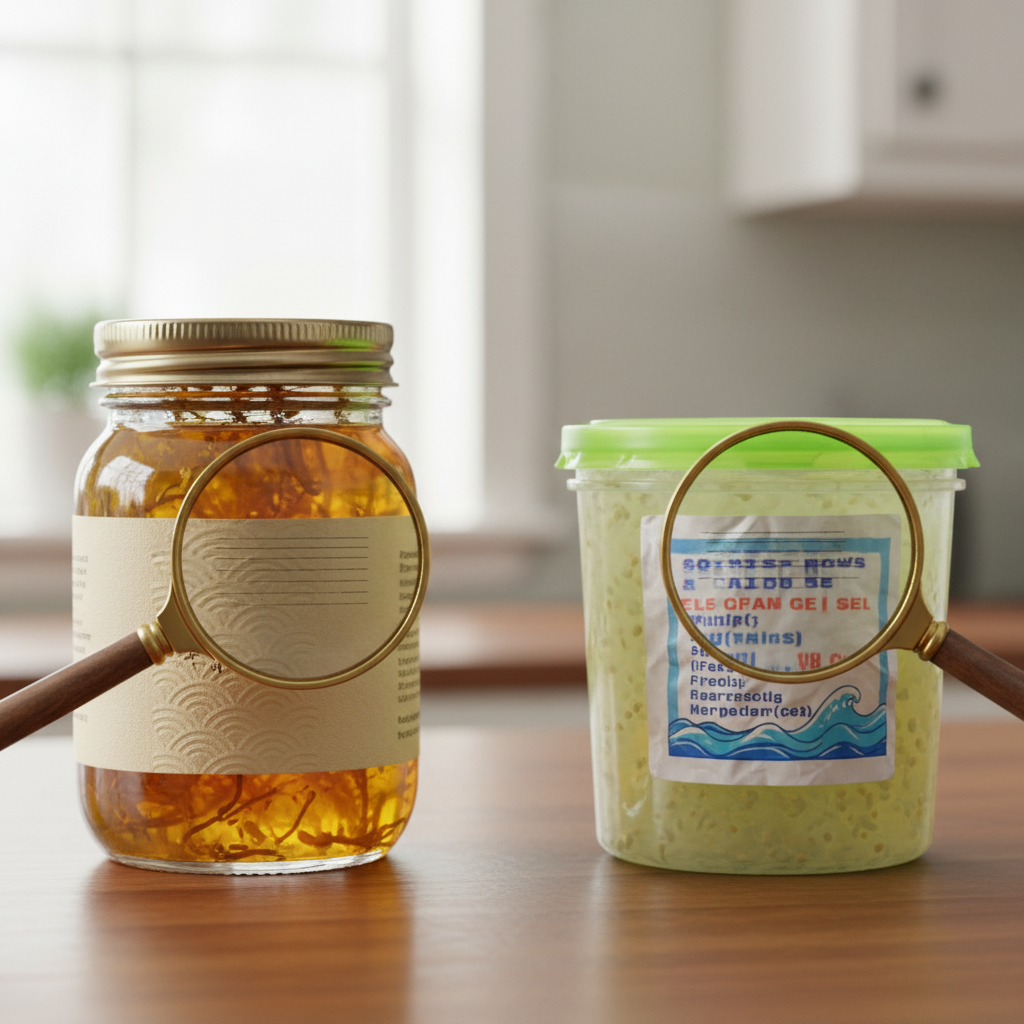
- Check the ingredient list — the ingredients should be simple: sea moss, water, and (for flavored varieties) fruit. Any thickeners, gums, or starches are red flags.
- Texture test — real sea moss gel has a slightly variable texture with a natural feel. Gels made with thickeners often have an unusually smooth, perfectly uniform consistency that feels "processed."
- Shake test — real sea moss gel holds its shape. Gels diluted with excess water will slosh around in the jar like a liquid.
Scam #4: Home Kitchen Operations Posing as Professional Brands
Social media has made it easy for anyone to present themselves as a professional sea moss brand. Polished Instagram feeds, professional-looking labels, and compelling marketing copy can mask the reality that a product is being made in someone's home kitchen without proper food safety protocols.
Why This Matters
- Food safety risks — home kitchens lack the sanitation controls, temperature monitoring, and contamination prevention measures of commercial food facilities
- No regulatory oversight — home operations typically aren't registered with the FDA or subject to inspection
- No registered facility — a proper commercial kitchen costs money that home-based sellers rarely invest in
- Inconsistent quality — without standardized processes and quality control, every batch can be different
How to Spot It
- Ask about their facility — a legitimate producer will happily share information about their production facility and its FDA registration status
- Look for a physical address — professional brands have commercial addresses, not just P.O. boxes or no address at all
- Ask about sourcing — ask where the sea moss comes from and how it is made. If they don't exist, that's a major red flag.
- Research the company — look for business licenses, customer reviews on independent platforms, and a professional website (not just social media)
Scam #5: Exaggerated and False Health Claims
Some sea moss gel scams rely on making outrageous health claims to justify premium prices. While sea moss has genuine nutritional benefits, it's not a miracle cure for serious diseases.
Red Flag Claims
- "Cures cancer" or "kills cancer cells"
- "Reverses diabetes"
- "Cures infertility"
- "Eliminates autoimmune disease"
- "Replaces all medications"
- "Guaranteed weight loss of X pounds"
These claims are not only unsubstantiated — they're also illegal under FDA regulations. Any company making specific disease cure claims about a food product is violating federal law, which tells you something about their regard for rules and regulations in general.
Legitimate benefits of sea moss — supporting mineral intake, thyroid health, gut health, skin and hair vitality, immune function, and overall wellness — are meaningful and well-supported. But they should be communicated honestly, without overpromising or making medical claims.
Scam #6: Fake Reviews and Testimonials
In the age of online shopping, reviews are powerful. Some sea moss brands manipulate this by purchasing fake reviews, creating fictitious testimonials, or incentivizing customers to leave glowing reviews in exchange for free product.
How to Spot Fake Reviews
- All 5-star reviews — no product has a 100% satisfaction rate. A mix of ratings is more authentic.
- Generic language — fake reviews often use vague, overly positive language without specific details about the product
- Review dates clustered together — a sudden burst of reviews on the same day or week suggests organized fake reviewing
- Reviewer profiles — check if the reviewers have reviewed other products or if their profiles seem newly created
- Before-and-after photos — be skeptical of dramatic transformation photos, especially if they appear on multiple products or brands
Scam #7: Vague Quality Claims
Some brands make quality claims without providing any specifics. A trustworthy brand can tell you where its sea moss is harvested, how it is dried and cleaned, and where the gel is made.
What Real Transparency Looks Like
- The brand names where its sea moss is harvested — wild from the ocean or grown in pools
- The brand explains how it is prepared: dried, cleaned, and blended in a registered facility
- The full ingredient list is on the label
- The brand answers questions about sourcing and preparation openly
Mermaid's Magic is open about how our gel is made: wild-harvested Caribbean sea moss, sun-dried, then cleaned and blended with real whole fruit in our FDA-registered kitchen in Pensacola, Florida.
Your Complete Checklist for Avoiding Sea Moss Scams
Before purchasing any sea moss product, run through this checklist:
- Is the sea moss wild-harvested? Ask for specifics about where and how it's harvested.
- Is the product made in an FDA registered facility? This is a baseline standard for food safety.
- Does the brand explain its sourcing and preparation? Look for specifics about where it comes from and how it is made.
- Are the ingredients clean and simple? Sea moss, water, and real fruit. No fillers, thickeners, or artificial ingredients.
- Are health claims reasonable? Wellness benefits, not miracle cures.
- Does the company have a legitimate business presence? Physical address, professional website, verifiable business registration.
- Are reviews authentic? Look for detailed, varied reviews across multiple platforms.
- Is the price realistic? Quality sea moss costs more to produce. Extremely low prices suggest compromised quality.
- How is the product shipped? Perishable sea moss gel should be shipped with appropriate temperature control.
- Does the company communicate transparently? Reputable brands answer questions openly and don't hide behind vague marketing.
Why Mermaid's Magic Is Different
We founded Mermaid's Magic specifically because we saw the need for a sea moss brand that operates with integrity in a market plagued by sea moss gel scams. Here's what sets us apart:
- Wild-harvested Caribbean sea moss — not pool-farmed, not from questionable sources
- FDA registered commercial kitchen — our Pensacola, Florida facility meets federal food safety standards
- Real whole fruit — actual mangoes, strawberries, blueberries, and pineapples. No concentrates, no artificial flavoring.
- Small-batch — cleaned and blended in our FDA-registered kitchen in Pensacola, Florida
- No preservatives or fillers — just sea moss, water, and fruit. Nothing else.
- Vegan, non-GMO — clean ingredients you can feel good about
- Transparent business practices — we tell you exactly what's in our products, and where and how they're made
In a market where trust is hard to come by, Mermaid's Magic earns it through transparency, quality, and consistency.
Try Mermaid's Magic Sea Moss Gel
Skip the scams and go straight to the real thing. Mermaid's Magic sea moss gel is wild-harvested from the Caribbean, blended with real whole fruit, and made in our FDA registered kitchen in Pensacola, Florida. No preservatives, no fillers, no compromises. Choose from mango, strawberry, blueberry, strawberry matcha, pineapple, pineapple blue spirulina, and power berry. Free shipping on orders over $100, with fresh shipments every Monday, Tuesday, and Wednesday.